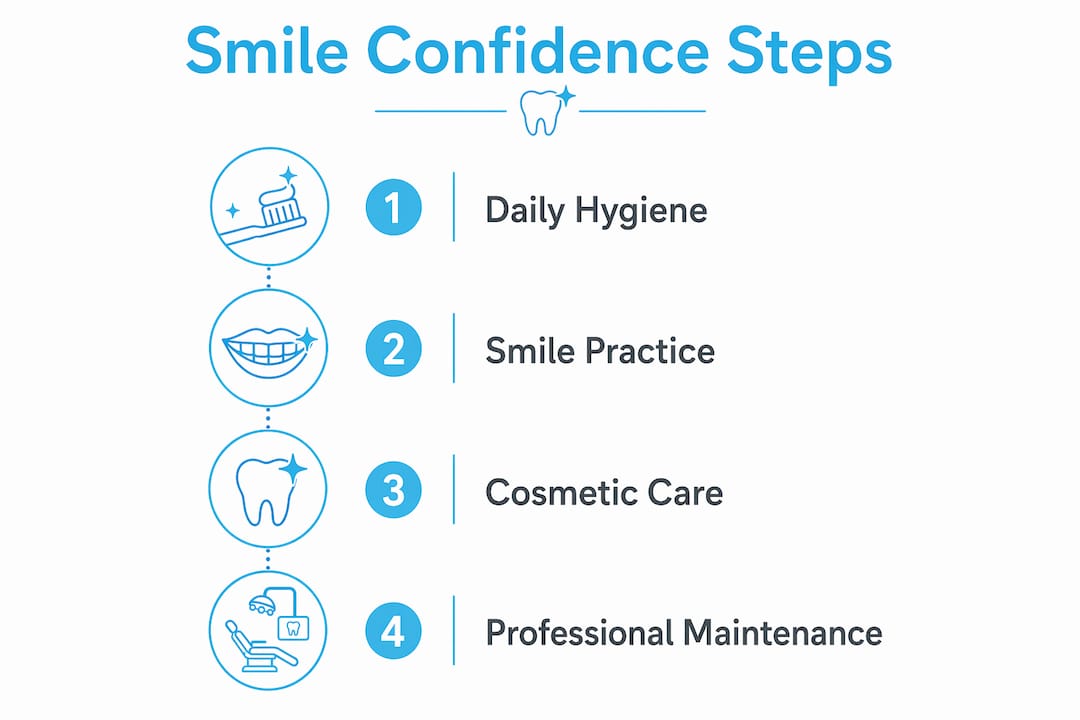
Smile confidence is defined as feeling genuinely at ease with the appearance and health of your teeth and gums. Most people who want to build confidence in their smile focus only on cosmetic fixes, but the most lasting results come from combining daily oral hygiene habits, natural smile training, and targeted dental treatments. The American Dental Association recommends brushing twice daily for two full minutes with fluoride toothpaste and flossing once daily as the foundation of any smile improvement plan. These improve smile confidence steps work together progressively. You do not need to do everything at once. Starting with the basics and adding layers over time is the most realistic and rewarding approach.
What daily oral hygiene habits build a confident smile?
Good oral health is the starting point for every other step. No cosmetic treatment holds up well on a foundation of plaque, gum inflammation, or enamel erosion. Getting the basics right first protects your investment in any future treatment.
Daily brushing and flossing significantly reduce plaque and gum inflammation, which directly improves the appearance of your smile. Swollen or red gums make teeth look shorter and less attractive, even when the teeth themselves are healthy. Flossing once daily removes debris from between teeth that a toothbrush simply cannot reach.
Here is a simple daily routine that supports a healthier, more attractive smile:
- Brush twice daily for two full minutes using a fluoride toothpaste. Set a timer if needed. Most people stop at 45 seconds.
- Floss once daily, ideally before bed, to clear plaque from between teeth and along the gumline.
- Rinse with an antibacterial mouthwash to reduce bacteria that cause bad breath and gum irritation.
- Drink water throughout the day to rinse away food acids and keep saliva production healthy.
- Use a straw for coffee, tea, and dark juices to reduce direct contact with enamel.
- Limit acidic and sugary foods, which erode enamel and create conditions for staining and decay.
Pro Tip: Switch to an electric toothbrush if you find it hard to brush for the full two minutes. Most electric models have a built-in timer and remove more plaque than manual brushing alone.
The table below shows which daily habits have the most direct impact on smile appearance.
| Habit | Primary benefit | Frequency |
|---|---|---|
| Fluoride toothpaste brushing | Strengthens enamel, removes surface stains | Twice daily |
| Flossing | Reduces gum inflammation and plaque between teeth | Once daily |
| Water consumption | Neutralises acids, prevents dry mouth | Throughout the day |
| Limiting staining beverages | Reduces enamel discolouration | As needed |
| Professional cleaning | Removes tartar and deep surface stains | Twice yearly |
Professional cleanings belong in this routine too. Biannual cleanings remove tartar and surface stains that regular brushing misses, revealing brighter enamel and preventing gum disease. Tartar cannot be removed at home once it hardens, which is why professional care is not optional for lasting smile confidence.
How can you practise and train your smile to look natural?
A confident smile is not just about teeth. It is about how relaxed and genuine your expression looks. Many people have attractive teeth but still feel self-conscious because their smile looks stiff or forced. The good news is that smiling naturally is a skill you can practise.

Jaw tension is a major cause of forced-looking smiles. When your jaw is clenched, your lips pull tight and your eyes do not soften the way they do in a genuine expression. Relaxing your jaw and shoulders before smiling dramatically improves how natural your smile appears.
Follow these four steps before any photo or social situation where you want to smile confidently:
- Take one slow breath in through your nose. This activates your parasympathetic nervous system and reduces physical tension.
- Drop your shoulders away from your ears. Most people carry tension here without realising it.
- Unclench your jaw. Let your back teeth part slightly. Your face will immediately soften.
- Part your lips slightly before smiling. This prevents the tight, closed look that makes smiles appear forced.
The tongue trick is another technique worth knowing. Press the tip of your tongue lightly against the back of your upper front teeth as you smile. This subtly lifts the upper lip and prevents a gummy smile, giving you more control over how much gum shows.
When being photographed, replace the word “cheese” with a softer sound like “mocha” or “money.” These sounds naturally relax the mouth into a more flattering position than the wide, tense shape that “cheese” creates.
Practising smiling regularly releases endorphins and serotonin, which elevates mood and helps you feel more comfortable with your expression over time. The emotional side of smile confidence grows alongside the physical changes. Being patient and kind with yourself through this process matters just as much as the technique itself. You can find more natural smile exercises on the Healthysmiledentalhygiene website.
What cosmetic dental treatments can enhance your smile confidence?
Once your oral health foundation is solid, cosmetic treatments can address specific concerns like discolouration, chips, gaps, or gum shape. The key is choosing treatments in the right order. Skipping steps creates complications that cost more to fix later.
Performing whitening or veneers without first addressing oral health risks infection and restoration failure. Decay, gum disease, and bite issues must be resolved before any cosmetic work begins. This is not just a precaution. It is the standard sequence that protects your results.
Here is how common cosmetic treatments compare:
| Treatment | What it addresses | Typical timeline |
|---|---|---|
| Professional whitening | Surface and deep staining | One visit |
| Clear aligner orthodontics | Gaps, crowding, misalignment | 6–24 months |
| Dental bonding | Chips, small gaps, minor shape issues | One to two visits |
| Porcelain veneers | Colour, shape, size of front teeth | Two to three visits |
| Gum contouring | Gummy smile, uneven gumline | One visit plus healing |
| Crowns | Severely damaged or weakened teeth | Two visits |
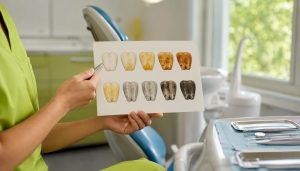
Professional whitening can brighten teeth by up to 10 shades in a single visit. That makes it one of the fastest and most cost-effective first steps for patients whose main concern is tooth colour. At-home kits exist, but professional treatment produces more consistent results with less risk of sensitivity.
Clear aligners typically require 6–24 months to close gaps or align teeth. Orthodontic treatment should always precede permanent cosmetic restorations like veneers or crowns. Placing veneers on teeth that are not yet properly aligned means the restorations may need to be redone after orthodontic movement.
Gum contouring requires a healing period of 2–6 weeks before final restorations are placed. Rushing this step affects the final aesthetic result. If you are planning veneers or bonding alongside gum reshaping, your dental provider will schedule these in the correct sequence.
- Bonding repairs chips and small gaps in one or two visits and is reversible.
- Veneers cover the full front surface of a tooth and require some enamel removal.
- Crowns and bridges are used when a tooth is too damaged for bonding or veneers alone.
How does professional dental care maintain your smile results?
Cosmetic improvements fade without consistent professional care. Whitening results dull, gum health declines, and restorations wear faster when maintenance is neglected. Professional care is what keeps your smile looking the way it did right after treatment.
Dental appointments help uncover and treat decay or gum disease early, before these issues undermine cosmetic work. A small cavity beneath a veneer, caught late, can mean losing the restoration entirely. Catching it early means a simple repair.
Here is what ongoing professional care looks like in practice:
- Schedule cleanings twice a year. Your hygienist removes tartar and polishes away surface stains that brushing leaves behind.
- Book a check-up at least once a year. Your dentist can spot early signs of decay, gum recession, or restoration wear.
- Tell your provider about any cosmetic work you have had. Veneers, bonding, and whitening all require specific care instructions during cleanings.
- Avoid biting hard foods with veneered teeth. Veneers can chip when used for mechanical tasks like cracking nuts or biting ice. Front teeth with veneers are designed for appearance, not force.
- Use a night guard if you grind your teeth. Grinding wears down natural enamel and damages restorations faster than almost anything else.
Pro Tip: Ask your hygienist about the right toothpaste for your restorations. Some whitening toothpastes are too abrasive for bonding or veneers and can dull their surface over time.
Understanding why professional cleaning matters goes beyond aesthetics. Tartar build-up below the gumline contributes to bone loss over time. Protecting your gum health protects the long-term stability of every cosmetic result you have worked toward. Regular dental visits are the single most reliable way to protect that investment.
Key takeaways
Lasting smile confidence comes from combining consistent daily hygiene, natural smile training, correctly sequenced cosmetic treatments, and twice-yearly professional care.
| Point | Details |
|---|---|
| Start with daily hygiene | Brush twice daily with fluoride toothpaste and floss once daily before any cosmetic step. |
| Train your smile naturally | Use the four-step pre-smile reset and tongue trick to create a relaxed, genuine expression. |
| Sequence cosmetic treatments correctly | Resolve oral health issues first, then align teeth, then proceed to whitening or restorations. |
| Maintain results professionally | Biannual cleanings remove tartar and stains that home care cannot address. |
| Protect restorations with care | Avoid biting hard foods with veneers and use a night guard if you grind your teeth. |
Smile care at Healthysmiledentalhygiene in Orangeville
Healthysmiledentalhygiene offers preventive, cosmetic, and restorative care for patients of all ages in Orangeville and the surrounding Dufferin County area. Whether you are starting with a professional cleaning or exploring whitening and cosmetic options, the team provides personalised guidance at every step.

From professional teeth whitening to crowns, bridges, and family dental services, Healthysmiledentalhygiene helps you understand your options without pressure. The focus is always on your comfort and realistic outcomes. If you are ready to take the next step, book a visit with the Orangeville team and get a clear picture of what is possible for your smile.
FAQ
What is the first step to improve smile confidence?
The first step is establishing a consistent daily hygiene routine: brush twice daily with fluoride toothpaste and floss once daily. This reduces plaque and gum inflammation, which directly improves how your smile looks and feels.
How long does professional whitening take to see results?
Professional whitening can brighten teeth by up to 10 shades in a single visit. Results are visible immediately after treatment, making it one of the fastest cosmetic steps available.
Should I whiten my teeth before getting orthodontic treatment?
Orthodontic treatment with clear aligners should come before whitening or permanent restorations. Aligning teeth first ensures cosmetic results are placed correctly and do not need to be redone after tooth movement.
How often should I see a dentist to maintain my smile?
Professional cleanings twice a year are the standard recommendation. These appointments remove tartar and surface stains that brushing cannot address and allow early detection of any issues affecting your smile.
Can I improve my smile without cosmetic dental treatment?
Yes. Daily brushing, flossing, drinking water, limiting staining beverages, and practising natural smile techniques all improve smile appearance and confidence without any cosmetic procedures.
Recommended
- Teeth Whitening: Brighten Your Smile – Infinity Cosmetic Med Spa
- The Step-by-Step Guide to Getting Dental Implants – Healthy Smile Dental Hygiene | Dentist Orangeville | Invisilign
- Oral Hygiene Hacks: Orangeville’s Expert Tips – Healthy Smile Dental Hygiene | Dentist Orangeville | Invisilign
- Oral Health – Healthy Smile Dental Hygiene | Dentist Orangeville | Invisilign