A trusted dentist shows clear communication, evidence-based care, visible infection control, transparent costs, and verifiable provincial licencing. Those five pillars protect your health and your wallet, and every one of them is something you can check before you ever sit in the chair.
Here is a quick scan of the strongest trust signals to look for:
- Verifiable provincial licence with no restrictions or discipline history
- Clear, jargon-free explanations and willingness to show X-rays or photos
- Written treatment plan and cost estimate before any major work begins
- Informed consent as an ongoing conversation, not just a signature
- Prevention-first approach: routine care and early detection over aggressive treatment
- Visible infection control: gloves, masks, sterilised instruments, clean surfaces
- Professional affiliations and continuing education (e.g., Canadian Dental Association membership)
- Consistent positive patterns in reviews, not just a handful of isolated five-star posts
Bottom line: If a clinic meets most of these signs, book a consult with your questions ready. If it fails two or more, look elsewhere or request a second opinion before agreeing to any treatment.
Table of Contents
- 1. The dentist communicates clearly and shows you the evidence
- 2. They take a prevention-first approach to your care
- 3. The office environment reflects genuine infection control
- 4. You receive a written treatment plan and a clear cost estimate
- 5. Their provincial licence is current and verifiable
- 6. The dentist supports ongoing education and professional development
- 7. Reviews show consistent, specific patterns over time
- 8. The team is responsive and the front desk sets the tone
- 9. They are transparent about what is medically necessary versus optional
- 10. Emergency care availability and follow-up are clearly explained
- Red flags: warning signs a dentist may be untrustworthy
- How to verify a dentist’s qualifications and disciplinary history in Canada
- Questions to ask at your first appointment
- When to get a second opinion or report a concern
- How to read online reviews without being misled
- Key takeaways
- Healthy Smile Dental Hygiene is ready to answer your questions
- Helpful Canadian sources for licence verification and patient guidance
- FAQ
1. The dentist communicates clearly and shows you the evidence
A dentist who genuinely respects you explains what they see, why it matters, and what your options are, in plain language. They show you X-rays or intraoral photos when describing a finding, rather than simply announcing a diagnosis and moving on. The Canadian Dental Association identifies truthfulness and patient-centred care as core ethical pillars, which means a trusted dentist treats informed consent as a continuing dialogue, not a one-time form to sign.
Watch for whether the dentist sits down, makes eye contact, and actually listens before speaking. A rushed explanation or a dismissive “trust me” when you ask about alternatives is a meaningful signal. According to CDA guidance on treatment discussions, patients have the right to accept or decline any recommended treatment, and a good dentist respects that right without pressure.
Pro Tip: Ask the dentist to walk you through your X-rays at your first appointment. A trustworthy clinician will do this without hesitation and will explain what they see in terms you can follow.
2. They take a prevention-first approach to your care
Trusted dental practices lead with routine care and early detection rather than jumping to complex or costly procedures; see your preventative dental visit checklist for families for practical guidance on maintaining family oral health. A dentist who prioritises regular dental visits and catches small problems early is working in your interest. Minimally invasive options should always be discussed before more aggressive ones.
This approach shows up in practical ways: the dentist recommends cleanings and screenings on a schedule that fits your actual risk level, not a one-size-fits-all frequency driven by billing cycles. If you want to understand what a thorough check-up involves, a clear guide to oral health screening can help you know what to expect and what questions to ask.
3. The office environment reflects genuine infection control
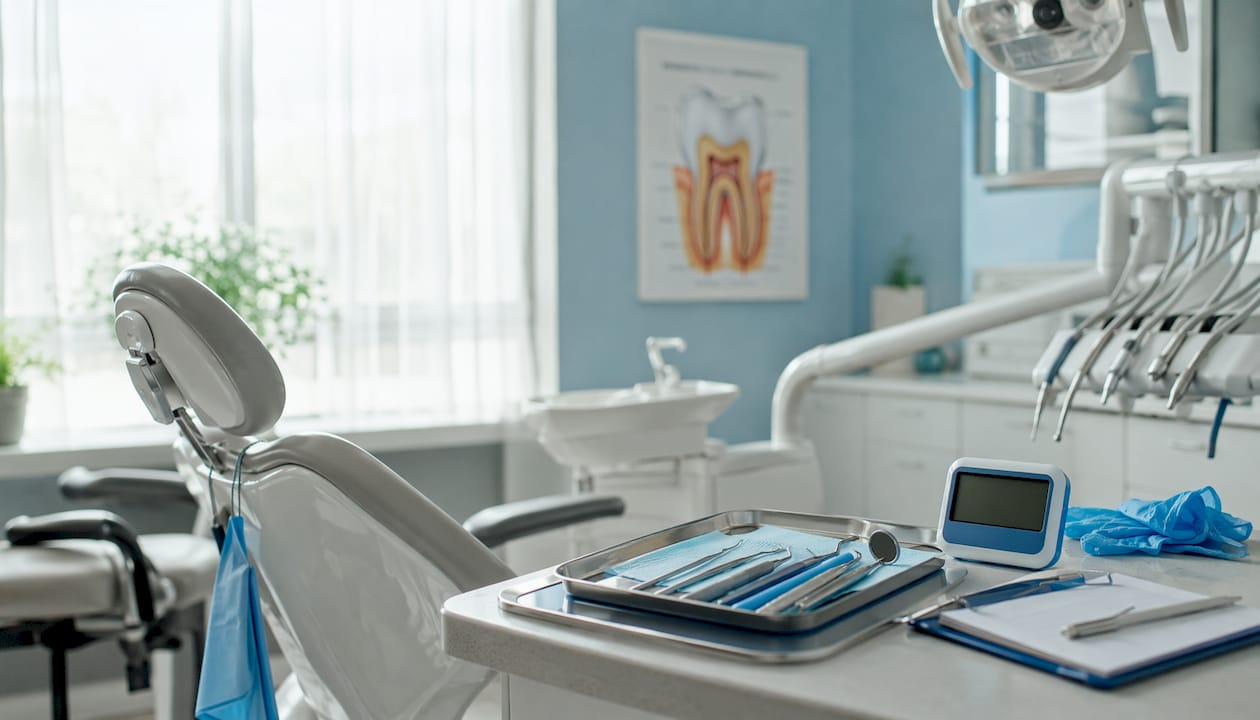
Cleanliness is not just about appearances. Proper infection control means gloves and masks changed between patients, sterilised instruments, covered surfaces, and a tidy, organised treatment area. You should be able to see these steps happening, not just assume they are.
A first phone call or new patient consult already tells you a great deal. Notice whether the reception area is clean and organised, whether staff answer questions confidently, and whether the clinic offers to explain its sterilisation process if you ask. Clinic visits let patients observe whether clinicians show X-rays, explain procedures, and maintain visible hygiene standards throughout the appointment.
4. You receive a written treatment plan and a clear cost estimate
Before any significant procedure, a reliable dental practice gives you a written treatment plan that spells out what is being done, why, and what it will cost. This is not a courtesy; it is expected good practice. The estimate should distinguish between what is medically necessary and what is optional or cosmetic, so you can make an informed decision.
Ask about direct billing to your insurance provider and whether the clinic will submit claims on your behalf. If a dentist resists putting a treatment plan in writing or gives vague cost ranges that shift after the appointment, that pattern warrants caution.
5. Their provincial licence is current and verifiable
Every practising dentist in Canada must be registered with their provincial or territorial dental regulator, and that registration is publicly searchable. In Ontario, the Royal College of Dental Surgeons of Ontario (RCDSO) maintains a public register where you can confirm a dentist’s current certificate of registration, any restrictions, specialty training, and any disciplinary history.
This check takes about two minutes and is far more reliable than any marketing page or third-party directory. The RCDSO register also documents facility permits (such as sedation authorisation) and links to full Notices of Hearing when discipline matters are on record. If a dentist’s name does not appear, or appears with restrictions you were not told about, contact the regulator directly.
6. The dentist supports ongoing education and professional development
A dentist who pursues continuing education stays current with evidence-based techniques, updated infection-control protocols, and new treatment options. Look for stated clinical interests or specialty training on a dentist’s profile, and check whether the practice mentions professional affiliations such as Canadian Dental Association membership.
This matters because dentistry evolves. A clinician who completed their degree 20 years ago and has not updated their knowledge since may still be technically licenced but not practising at the current standard of care. Continuing education is a practical signal of commitment to patients, not just a credential to display.
7. Reviews show consistent, specific patterns over time
A handful of glowing five-star reviews posted within the same week is not the same as 80 reviews spread over three years that consistently mention the same things: clear explanations, a calm atmosphere, staff who listen, and fair pricing. Pattern-based reading is what makes reviews useful. For a deeper look at how to interpret what patients are saying locally, this guide on reading dental clinic reviews in Orangeville walks through what to look for.
Community referrals from friends, family, or a pharmacist remain one of the most dependable starting points, and they work best when combined with a regulator check and an in-person consult. Personal recommendations give you context that no review platform can replicate.
8. The team is responsive and the front desk sets the tone
A compassionate, well-organised front desk is often the first real indicator of a patient-centred practice. How quickly does the clinic return calls? Does the receptionist answer questions about fees and scheduling without deflecting? Are new patients welcomed with clear information about what to bring and what to expect?

The tone at the front desk tends to reflect the culture of the whole practice. A team that listens, follows up, and treats your time with respect is usually a team that brings those same qualities into the treatment room. This is worth noticing on your very first call.
9. They are transparent about what is medically necessary versus optional
One of the clearest signs of a reliable dental practice is a dentist who separates clinical need from optional upgrades without pressure. If a dentist recommends a treatment, you should be able to ask “what happens if I wait?” or “is there a less invasive option?” and receive a straight answer. Trusted dentists base their recommendations on clinical need, not on insurance coverage or upselling opportunities.
Be attentive to how a dentist responds when you ask about alternatives. Hesitation, irritation, or a pivot to cost-based reasoning rather than clinical reasoning is worth noting.
10. Emergency care availability and follow-up are clearly explained
A trustworthy practice tells you upfront what to do if you have a dental emergency outside regular hours. Whether that means an after-hours line, a clear voicemail protocol, or a referral to an emergency clinic, the process should be explained before you need it. Practices that leave patients to figure this out on their own during a painful situation are not prioritising patient welfare.
Follow-up after a procedure matters too. A quick check-in call or a clear explanation of what to watch for after treatment shows the clinic is invested in your recovery, not just the appointment itself.
Red flags: warning signs a dentist may be untrustworthy
Knowing what to avoid is just as useful as knowing what to look for. These patterns should prompt caution or a second opinion:
- High-pressure sales tactics: urgency language, bundled “deals,” or pressure to book multiple procedures at once
- Unexpected recommendations for major work at a first visit, with no clear clinical explanation
- Rushed appointments where findings are announced but not explained, and questions are brushed aside
- Refusal to share X-rays or records when you ask for them (in Canada, patients have the right to access their own records)
- Inconsistent or absent infection-control steps: no gloves changed, instruments not visibly sterilised, cluttered surfaces
- Promotional language that emphasises discounts or packages rather than your specific clinical needs
- Consistent negative review patterns around the same issues (billing surprises, pressure, poor communication) across multiple platforms
How to verify a dentist’s qualifications and disciplinary history in Canada
Verifying a dentist’s credentials takes only a few minutes and gives you information no marketing page can provide.
- Identify your provincial regulator. In Ontario, that is the RCDSO. Every province and territory has its own dental regulatory college; a quick search for “[province] dental regulator” will find yours.
- Search the public register by name. Enter the dentist’s full name. The result will show their current certificate of registration, the date of initial registration, any specialty training, and facility permits such as sedation authorisation.
- Check for restrictions or discipline notices. The RCDSO register includes links to discipline committee decisions and Notices of Hearing. A clean record shows no entries in these fields.
- Note the certificate type. A general dentist and a specialist hold different certificates. Confirm the dentist’s certificate matches the treatment they are recommending.
- Contact the regulator if anything is unclear. Regulators are public-protection bodies and will answer questions about a registrant’s standing.
Regulator registers are authoritative because they are official, verified records maintained under provincial legislation. Third-party directories and review sites cannot guarantee the same accuracy.
Questions to ask at your first appointment
Arriving with a short list of questions is one of the most practical things you can do. Here is a prioritised set:
- “Can you walk me through what you found and show me on the X-rays?” A trustworthy dentist will do this without hesitation.
- “What are my options, and what happens if I choose to wait?” This reveals whether the dentist respects your decision-making.
- “How often do you perform this procedure?” Frequency matters for complex treatments like implants or root canals.
- “Can I have a written treatment plan and cost estimate before we proceed?” Any reliable practice will provide this.
- “Do you offer direct billing to my insurance provider?” Clarifies the administrative process upfront.
- “What should I do if I have a concern or emergency after hours?” A clear answer here signals a well-organised practice.
Pro Tip: Pay attention to how the dentist responds to your questions, not just what they say. A clinician who listens, pauses to think, and answers directly is showing you their communication style under low-stakes conditions.
What you are listening for is respect. A dentist who presents options, explains risks and benefits, and gives you time to decide is practising informed consent as a documented, ongoing dialogue, which is exactly what good practice looks like.
When to get a second opinion or report a concern
Some situations clearly call for a second opinion before you agree to anything:
- A recommendation for multiple crowns, extractions, or other major work at a first visit
- A diagnosis that conflicts with what another dentist told you recently
- Persistent pain or symptoms that are not being explained to your satisfaction
- Feeling pressured to book immediately or sign a financial agreement on the spot
If you decide to seek a second opinion or file a formal complaint, here is how to proceed:
- Gather your documentation. Request copies of your X-rays, written estimates, consent forms, and payment receipts. In Canada, you are entitled to access your own dental records.
- Write dated notes. Record the date, what was said, and who was present for any conversation that concerned you.
- Start with a direct conversation. The CDA recommends speaking with your dentist first because many concerns stem from miscommunication and can be resolved directly.
- Contact your provincial dental regulator if the concern is not resolved or involves potential misconduct. Provide your documentation, a clear timeline, and a description of the issue.
- Follow up with the regulator. Ask about their process and expected timelines so you know what to expect while the matter is reviewed.
How to read online reviews without being misled
Reviews are useful when you treat them as a body of evidence rather than a verdict. Look for recurring themes across many reviews: how the team explains procedures, how they handle anxious patients, whether billing surprises come up repeatedly. A single glowing review or a single harsh one tells you almost nothing.
Watch for signs of artificial inflation: a sudden burst of five-star reviews in a short window, vague praise with no specific details (“great experience!”), or identical phrasing across multiple posts. These patterns suggest incentivised or fabricated reviews rather than genuine patient feedback.
- Look for specificity: reviews that mention a procedure, a staff member by role, or a particular concern are more credible than generic praise.
- Check response patterns: how a practice responds to negative reviews reveals its attitude toward accountability.
- Combine review reading with a regulator check and an in-person consult before making a final decision.
Pro Tip: Search the dentist’s name alongside the word “complaint” or check the RCDSO discipline list directly. A clean regulatory record combined with consistent positive review themes is a strong combined signal.
Key takeaways
A trusted dentist is identifiable by a consistent pattern of clear communication, verifiable licencing, transparent costs, and prevention-focused care, all of which you can confirm before committing to treatment.
| Point | Details |
|---|---|
| Verify the licence first | Search your provincial regulator’s public register before your first appointment. |
| Written plans protect you | Always request a written treatment plan and cost estimate before major work begins. |
| Red flags are patterns, not incidents | One rushed visit may be a bad day; repeated pressure or withheld records is a warning. |
| Reviews need context | Look for consistent themes across many reviews, then combine with a regulator check. |
| Healthysmiledentalhygiene in Orangeville | A local, prevention-first clinic where families can ask questions, see written estimates, and book a consult with confidence. |
Healthy Smile Dental Hygiene is ready to answer your questions
Finding a dentist you can genuinely trust should not feel like a guessing game. Healthysmiledentalhygiene in Orangeville is a family-focused clinic built around exactly the signals this article describes: clear communication, prevention-first care, written treatment plans, and a welcoming team that takes the time to explain what they find and why it matters.
Whether you are booking a dental cleaning in Orangeville for the first time or bringing the whole family in for check-ups, the team at Healthysmiledentalhygiene is happy to walk you through their services, answer questions about licencing and treatment options, and provide written estimates before any work begins. The clinic serves patients of all ages across Orangeville and Dufferin County, with a focus on making every visit comfortable and every patient genuinely informed.
Ready to see what patient-centred care feels like? Book a visit with Healthysmiledentalhygiene and come with your questions. The team is glad to help.
Helpful Canadian sources for licence verification and patient guidance
Use these resources to verify credentials, understand your rights, and find local support:
- Royal College of Dental Surgeons of Ontario (RCDSO): Ontario’s dental regulator. Search the public register to confirm a dentist’s current certificate, restrictions, specialty training, and any disciplinary history. The authoritative source for Ontario patients.
- RCDSO Find a Dentist register: The direct search tool for the RCDSO public register. Use it to look up any Ontario dentist by name and review their full registration details.
- Canadian Dental Association — ethics and patient guidance: The CDA’s ethics framework outlines what patients can expect from a licenced dentist, including informed consent, evidence-based practice, and accountability.
- Healthysmiledentalhygiene — services: Local service pages covering preventive, cosmetic, and restorative care in Orangeville. A practical starting point for families in Dufferin County exploring their options.
- How to choose the right dentist in Orangeville: A step-by-step local guide for patients who want a fuller selection process beyond this checklist.
For patients outside Ontario, search “[your province] dental regulatory college” to find your provincial equivalent of the RCDSO. Every province and territory maintains a public register under similar legislation.
FAQ
How do I know if a dentist is trustworthy?
Look for clear communication, a willingness to show X-rays and explain findings, written treatment plans, and a verifiable licence on your provincial regulator’s public register. Consistent positive review patterns and a prevention-first approach are strong supporting signals.
What are the red flags of a dentist to watch for?
High-pressure recommendations for major work at a first visit, refusal to share records, vague or shifting cost estimates, and poor infection-control practices are the most common warning signs. A consistent pattern of these behaviours across reviews is more significant than a single incident.
How can I tell if a dentist is scamming me?
Unexpected recommendations for multiple costly procedures, pressure to sign financial agreements quickly, and billing that does not match the written estimate are the clearest indicators. Check the dentist’s name on your provincial regulator’s discipline list and request itemised receipts for every service.
What makes a dentist genuinely good at their job?
Clinical skill combined with honest communication. A good dentist explains options, respects your right to decline treatment, pursues continuing education, and treats informed consent as an ongoing conversation rather than a formality, as outlined in CDA patient communication guidance.
Can Healthysmiledentalhygiene help me understand my treatment options?
Yes. The team at Healthysmiledentalhygiene in Orangeville is happy to explain findings, provide written estimates, and answer questions about any recommended treatment before you commit. Book a consult and come with your questions ready.
Recommended
- Smile Alert! 10 Telltale Signs It’s Time for a Family Dental Check-Up! – Healthy Smile Dental Hygiene | Dentist Brampton | Invisilign
- Top-Rated Dental Checkups: Orangeville’s Trusted Dentists – Healthy Smile Dental Hygiene | Dentist Orangeville | Invisilign
- What Exams Must Have In Your Dental Checkup? – Dentist Brampton
- Trusted Family Dentistry in Orangeville: Your Go-To Guide – Healthy Smile Dental Hygiene | Dentist Orangeville | Invisilign