A distraction technique in dentistry is a non-pharmacological method that shifts a patient’s attention away from a procedure to lower fear, perceived pain, and physiological stress. No needles, no sedation required. It works by occupying the brain’s attention channels so there is simply less mental bandwidth left to process discomfort or worry.
TL;DR: Distraction techniques are safe, low-cost tools that reduce dental anxiety in children and adults during routine and short restorative procedures. They work best for mild-to-moderate fear and are most effective when started before the procedure begins.
Common uses include:
- Routine cleanings and polishing for children aged 2 and up
- Local anaesthetic injections (one of the most anxiety-provoking moments of any visit)
- Short fillings, sealants, and scaling appointments
- Managing adult dental anxiety during non-invasive procedures
Research confirms these techniques are widely recognised as safe, cost-effective, and non-invasive across paediatric and adult dental settings.
Table of Contents
- What counts as a distraction technique in dentistry?
- What does the research actually show?
- How dental teams put distraction into practice
- How distraction differs by age
- Benefits, limitations, and when to consider sedation
- Practical tips for parents and patients before the visit
- Infection control and device safety in Canadian clinics
- A short evidence-informed protocol for dental teams
- Key takeaways
- Comfortable care for anxious patients at Healthysmiledentalhygiene
- Useful sources for further reading
- FAQ
What counts as a distraction technique in dentistry?
The term covers a broad range of methods, but they all share one goal: redirect attention away from the dental environment. Clinicians typically sort them into two categories.
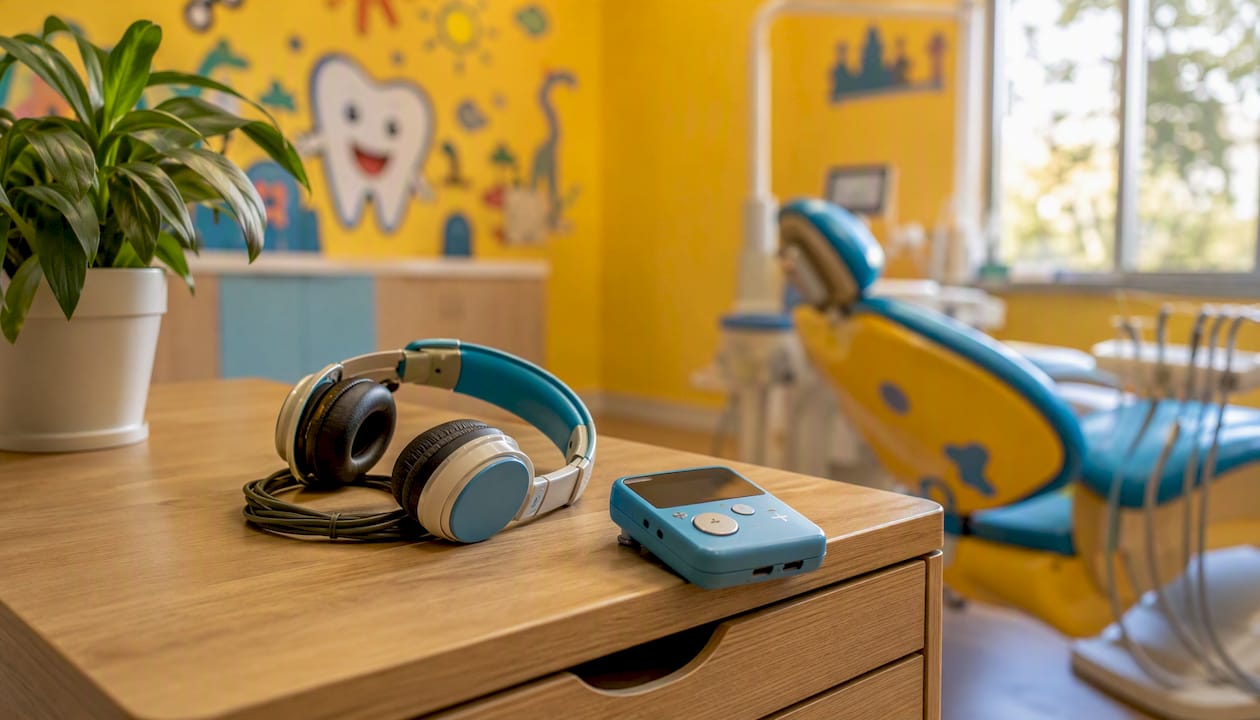
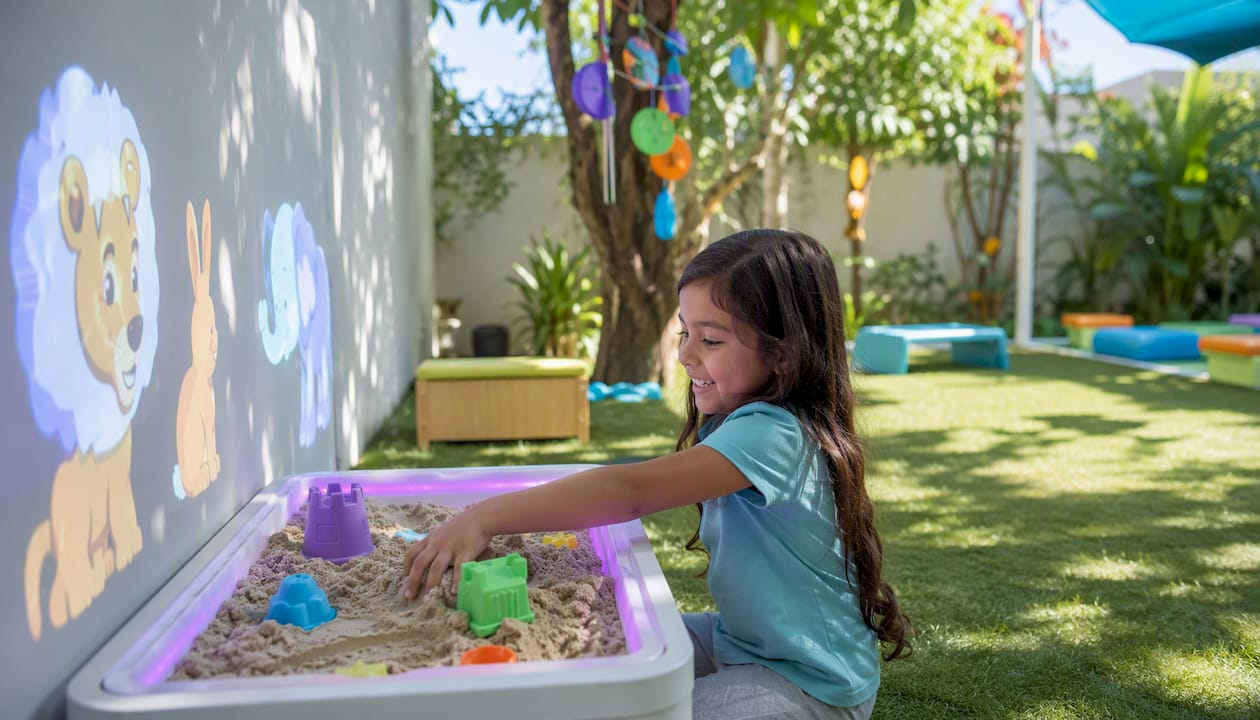
Passive distraction requires little active engagement from the patient. Think background music through sanitised headphones, a story read aloud by a parent, a ceiling-mounted TV playing a favourite show, or a simple squeeze toy in the patient’s hand. These options work well for younger children or patients who are too anxious to engage with something interactive.
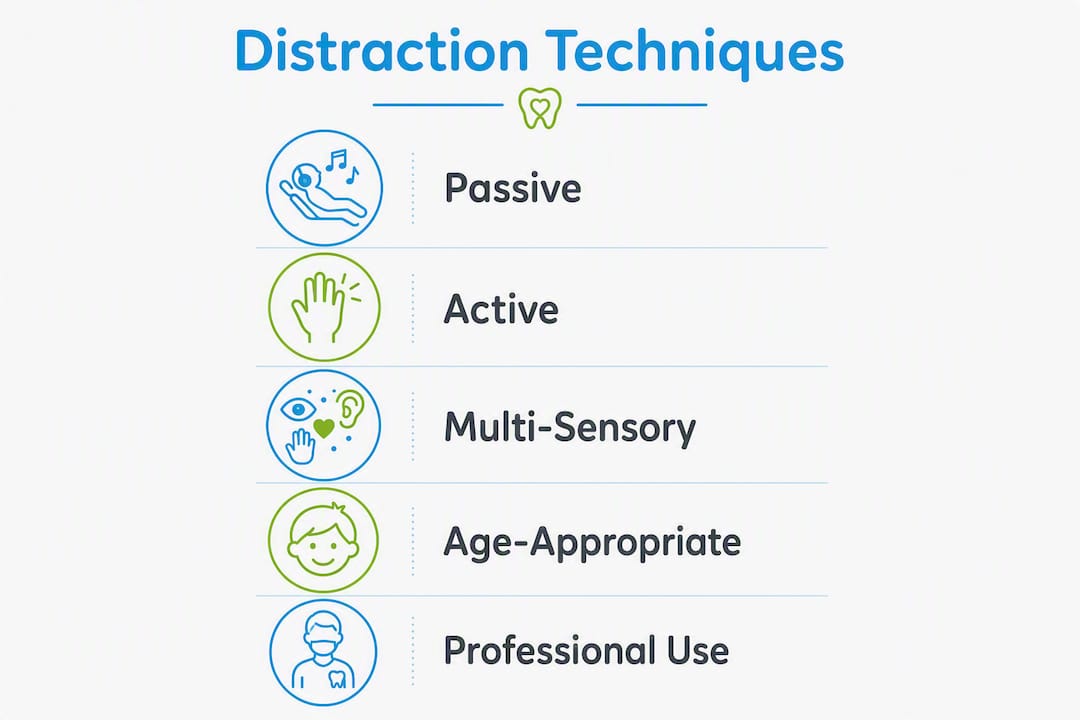
Active and immersive distraction demands more cognitive participation, which is precisely why it tends to work better. Tablets loaded with games or videos, audiovisual distraction (AVD) systems mounted on dental chairs, and virtual reality (VR) headsets all fall into this category. Ceiling-mounted and chair-mounted AVD systems often outperform audio-only methods in reducing anxiety because they occupy more sensory channels simultaneously.
The sensory channels targeted matter:
- Visual: ceiling TVs, tablet screens, VR headsets
- Auditory: music, audiobooks, guided imagery scripts, nature sounds
- Tactile: stress toys, textured fidget tools, weighted lap pads
- Olfactory: scented lip balm or a familiar smell from home
- Gustatory: flavoured toothpaste or topical anaesthetic gel
Multi-sensory approaches that combine visual, auditory, and tactile input tend to be the most engaging for children because they leave fewer attention channels free to focus on the procedure. A child wearing a VR headset, hearing a story, and holding a stress toy is far more occupied than one simply listening to music.
What does the research actually show?
The evidence is encouraging, though not without nuance. A systematic review and meta-analysis of non-pharmacological behavioural interventions found significant reductions in self-rated anxiety and pulse rate for distraction versus Tell-Show-Do in many paediatric studies, though results showed substantial heterogeneity across techniques and procedure types.
Not every distractor performs equally. One trial of stress balls during scaling and root planing found no significant reduction in patient stress, while studies of music and video distraction consistently showed measurable benefits. The takeaway: the method matters, and so does the match between technique and patient.
| Distraction type | Evidence strength | Best for |
|---|---|---|
| Audio-only (music, stories) | Moderate | Toddlers, mild anxiety, short procedures |
| Audiovisual (ceiling TV, tablet) | Moderate-strong | School-age children, routine visits |
| Virtual reality (VR headset) | Emerging, promising | Older children, teens, needle procedures |
| Tactile (stress toys) | Mixed/limited | As a supplement, not a standalone |
| Multi-modal (VR + audio + tactile) | Strong | Children with moderate anxiety, longer visits |
The limits are real and worth stating plainly. Distraction offers small-to-moderate benefits for mild-to-moderate dental fear, but systematic reviews note low-to-moderate certainty in many studies and recommend distraction as part of a broader strategy rather than as a standalone solution. For patients with severe dental phobia, or during highly invasive procedures, distraction alone is unlikely to be sufficient. Sedation or specialist referral may be the more appropriate path.
How dental teams put distraction into practice
Timing is everything. Starting distraction before the procedure begins is more effective than waiting until a child is already upset. Once anxiety escalates, redirecting attention becomes significantly harder.
Distraction works best when paired with Tell-Show-Do, the foundational behaviour guidance technique where the clinician explains, demonstrates, and then performs each step. The two approaches complement each other: Tell-Show-Do builds understanding and trust, while distraction occupies attention during the actual procedure. Distraction complements, not replaces, other behaviour guidance techniques such as positive reinforcement and a calm, predictable clinical environment.
A simple in-clinic workflow that many teams find effective:
- Before the appointment: Ask the parent or patient about favourite shows, songs, or games. Have devices charged and ready but out of sight initially.
- In the waiting room: Keep the environment calm. Camouflage instruments and reduce visible dental triggers before the patient enters the operatory.
- At the chair: Offer the distraction choice before any instruments appear. Let the child or patient select the option.
- During the procedure: The dental assistant or hygienist monitors engagement and adjusts volume or content if the patient’s attention drifts back to the procedure.
- After the visit: Offer brief positive reinforcement. Note what worked in the patient record for next time.
Staff roles matter. The dentist focuses on the procedure; the dental assistant or hygienist typically manages the device, maintains conversation, and watches for signs that the distraction is losing effectiveness. Parent involvement is encouraged for younger children, as a familiar voice or hand-hold adds an additional layer of comfort.
How distraction differs by age
A VR headset that thrills a ten-year-old will confuse a two-year-old. Matching the distractor to developmental stage is what makes the difference between a technique that works and one that gets ignored.
| Age group | What works best | When to start | Quick clinic tip |
|---|---|---|---|
| Under 2 | Parent presence, gentle voice, pacifier | From first visit | Keep parent in eyeline at all times |
| 2–5 years | Simple videos, bubbles, familiar toys, stories | Before instruments appear | Short clips, bright colours, familiar characters |
| 6–12 years | Tablets, ceiling TV, music, guided imagery | Before local anaesthetic | Let the child choose the show or playlist |
| Teens | Music via headphones, VR, podcasts | Before any injection | Offer autonomy; avoid “baby” options |
| Adults | Music, guided breathing, audiobooks | At chair-side, before procedure | Ask about preferences at booking |
A few additional notes by stage:
- Toddlers (under 2): Distraction at this age is mostly environmental. A calm parent, a familiar smell, and minimal visual triggers do more than any device.
- Preschoolers (2–5): Attention spans are short. Clips under five minutes, bubbles to blow, or a favourite small toy from home tend to hold attention better than longer content.
- School-age (6–12): This is the sweet spot for technology-based distraction. Canadian procedural pain guidelines recommend distraction for children aged 2 and older, with caregiver collaboration and child choice highlighted as key factors.
- Teens: Autonomy matters. Offering a teen the chance to choose their own playlist or podcast increases buy-in considerably.
- Children with additional needs: Sensory sensitivities may make some distractors (loud audio, bright screens) counterproductive. A quieter, tactile option or a familiar comfort object from home is often more appropriate. Discussing developmental considerations with the dental team before the visit helps tailor the approach.
Benefits, limitations, and when to consider sedation
Distraction techniques offer a genuinely useful set of advantages for most patients:
- Lower anxiety: Patients report less fear during and after procedures when distraction is used.
- Better cooperation: Children who are engaged with a video or game are less likely to move suddenly or resist treatment.
- Reduced physiological stress: Studies show measurable drops in pulse rate during distraction, reflecting a calmer nervous system response.
- Low cost and non-invasive: Most clinics can implement audio or video distraction with minimal equipment investment and no pharmacological risk.
- Builds positive associations: A child who associates the dental chair with their favourite cartoon is more likely to return willingly next time.
The limitations deserve equal honesty. Evidence quality varies across studies, results are inconsistent for invasive procedures, and patients with extreme anxiety often do not respond adequately to distraction alone. A child in full distress before the appointment even begins is unlikely to engage with a tablet.
One important caution: distraction should never be used as a form of deception. Telling a child to “watch this video” while concealing that an injection is about to happen undermines trust. The goal is to shift attention, not to mislead. Collaborative, choice-based use, where the patient knows what is happening and chooses how to cope, is both more ethical and more effective.
When to consider other approaches:
- Mild-to-moderate anxiety: try distraction first, paired with Tell-Show-Do and positive reinforcement.
- Moderate anxiety with poor response to distraction: combine with nitrous oxide or other pharmacological support.
- Severe dental phobia, extreme uncooperative behaviour, or complex procedures: discuss sedation dentistry options with your dental team.
Practical tips for parents and patients before the visit
Preparation at home makes clinic-side distraction significantly more effective. A child who arrives already calm and familiar with what to expect is far easier to engage.
Before the appointment:
- Preview a short video about what happens at a dental visit. Several child-friendly options are available on YouTube.
- Pack a small comfort item: a favourite toy, a stuffed animal, or a familiar-smelling item from home.
- Ensure your child is well-rested and has had a light snack. Hunger and fatigue lower distress tolerance.
- Use neutral, matter-of-fact language. Avoid phrases like “it won’t hurt” (which plants the idea of pain) or “be brave” (which signals there is something to fear).
On the day:
- Arrive five to ten minutes early so your child can settle into the environment before any clinical activity begins.
- Let your child choose the distraction option when the team offers one. That small act of control lowers anxiety measurably.
- Bring headphones from home if your child has a preferred pair. Familiar equipment feels less clinical.
- Sit where your child can see you. For younger children, physical contact (holding a hand) adds comfort that no device can replicate.
In the chair, three things to request from the team:
- Start the distraction before any instruments are introduced.
- Ask the team to narrate what they are doing in simple terms alongside the distraction, not instead of it.
- Request a brief debrief at the end: “You did great. The video helped, right?” reinforces the positive association.
Pro Tip: Offering your child a genuine choice, “Do you want to watch a show or listen to music?” gives them a sense of control over the experience. Research supports that perceived control is one of the most reliable ways to lower procedural anxiety in children.*
Learning how to explain dental procedures to children in age-appropriate language is another practical step parents can take before any appointment.
Infection control and device safety in Canadian clinics
Shared tablets and headsets raise a reasonable hygiene question: how clean are they? Canadian dental clinics follow infection prevention and control (IPAC) standards that apply to all patient-contact items, including distraction devices.
Standard practices clinics should follow:
- Headsets and earbuds: Wipe down with an approved disinfectant between patients, or use single-use disposable covers.
- Tablets and screens: Disinfect touch surfaces with a Health Canada-approved surface disinfectant after each patient. Screen protectors make this easier.
- Toys and fidget tools: Use items that can be fully disinfected or assign single-use items per patient. Soft toys that cannot be disinfected should not be shared.
- VR headsets: Require particular attention. Foam inserts should be single-use or replaced between patients; the headset body should be wiped with a compatible disinfectant.
Questions worth asking your clinic before a shared device is used:
- How is this device cleaned between patients?
- Are the headphone covers single-use or disinfected?
- Does the clinic have a written IPAC protocol for distraction devices?
Safety callout: VR headsets are generally not recommended for children under six due to developmental concerns about visual processing. Patients with a history of seizures, severe motion sickness, or significant vestibular issues should discuss VR suitability with their dental team before use. For most patients, standard audiovisual distraction via a screen or tablet carries no such concerns.
A short evidence-informed protocol for dental teams
Translating the research into daily clinic practice does not require a complex system. A straightforward protocol covers the key steps.
- Prepare before the patient arrives. Review the patient record for previous anxiety notes. Charge devices, load age-appropriate content, and have distraction options ready but out of sight.
- Offer choice at the chair. Before any instruments appear, present two or three options: “We have a tablet with shows, music through headphones, or a stress toy. Which would you like?” Let the patient or caregiver decide.
- Start distraction before the procedure. Engage the chosen method while the patient is still comfortable. Do not wait for signs of distress.
- Monitor engagement throughout. The dental assistant watches for signs that distraction is losing effectiveness: the patient’s gaze drifting to instruments, increased muscle tension, or verbal signs of anxiety. Adjust content or switch methods if needed.
- Debrief after the visit. Ask the patient or parent what worked. Note it in the record. This builds a personalised distraction profile over time.
Clinic action items:
- Train all clinical staff on the offer-choice-start-early protocol. The AAPD reports that distraction by imagination is commonly used by paediatric dentists as a behaviour guidance technique, reflecting how mainstream this approach has become.
- Maintain a device inventory with a written cleaning schedule.
- Document distraction use and patient response in clinical notes.
- Collect brief parent or patient feedback after each visit to track what works.
Sample staff script: “Before we get started, we’d love to make this as comfortable as possible for you. We have a tablet with shows, some music, or a fidget toy. Which sounds good to you?”
Outcome measures worth tracking include cooperation scores, pulse readings for selected visits, and a simple one-question parent satisfaction check immediately after the appointment.
Key takeaways
Distraction techniques are safe, non-invasive tools that reduce dental anxiety and improve cooperation, but they work best when matched to the patient’s age, chosen collaboratively, and started before the procedure begins.
| Point | Details |
|---|---|
| Start early | Begin distraction before instruments appear; proactive use prevents anxiety from escalating. |
| Match to age | Toddlers need parent presence; school-age children respond well to tablets and ceiling TVs; teens prefer autonomy and their own music. |
| Multi-modal works best | Combining visual, auditory, and tactile distractors occupies more attention channels and tends to produce better outcomes. |
| Know the limits | Distraction suits mild-to-moderate anxiety; severe dental phobia or invasive procedures may require sedation alongside or instead. |
| Healthysmiledentalhygiene | The Orangeville team uses distraction techniques alongside family-focused dental care to support anxious patients and children of all ages. |
Comfortable care for anxious patients at Healthysmiledentalhygiene
Dental visits do not have to feel stressful, and for many families in Orangeville and Dufferin County, the right approach makes all the difference. Healthysmiledentalhygiene’s team works with children and adults who feel nervous about dental care, using distraction methods, gentle communication, and a welcoming environment to make each visit as comfortable as possible.
For children, the team partners with parents to choose age-appropriate distractors and prepares kids before any instruments are introduced. For adults whose anxiety goes beyond what distraction alone can address, sedation dentistry in Orangeville is available as a next step. Whether your child needs their first cleaning or you have been putting off a visit for years, the Orangeville team can walk you through your options. Book a visit at Healthysmiledentalhygiene to find out which approach fits your situation best.
Useful sources for further reading
These sources informed this article and are worth bookmarking if you want to go deeper on the evidence or Canadian guidelines.
- Effectiveness of Distraction Techniques in Managing Pediatric Dental Patients (PMC) — A controlled study comparing multiple distraction methods in children; useful for understanding how different techniques compare in a clinical setting.
- Effectiveness of Nonpharmacological Behavioural Interventions in Managing Dental Fear and Anxiety among Children: A Systematic Review and Meta-Analysis (PMC) — The most comprehensive meta-analysis available; covers pulse rate, self-rated anxiety, and cooperation outcomes across multiple techniques.
- Management of Dental Anxiety via Distraction Technique (PMC) — A recent review covering passive and active distraction categories with clinical examples.
- Recent Developments in Non-Pharmacological Management of Children’s Behaviour Based on Distraction Techniques (MDPI Healthcare) — Covers technology-based distractors and multi-modal approaches; good for clinicians updating their practice.
- Nonpharmacological Behavior Guidance for the Pediatric Dental Patient (AAPD) — The American Academy of Pediatric Dentistry’s clinical guideline; the benchmark reference for paediatric behaviour management including distraction.
- Procedural Pain Management in Children and Youth: A Toolkit for Health Professionals (Kids in Pain) — A Canadian resource recommending distraction from age 2 upward; includes caregiver collaboration guidance relevant to Canadian dental settings.
- Practitioner Insights on Distraction Techniques (PMC) — Practitioner-level commentary on multi-sensory immersion and VR approaches.
For local guidance, the team at Healthysmiledentalhygiene in Orangeville is happy to answer questions about which distraction options are available at the clinic and how they are used for different age groups.
FAQ
What is a distraction technique in dentistry?
A distraction technique in dentistry is a non-pharmacological method that redirects a patient’s attention away from a dental procedure to reduce fear, perceived pain, and stress. Common examples include music through headphones, tablet videos, ceiling-mounted TVs, and virtual reality headsets.
What are the most effective distraction methods for children?
Audiovisual distraction (tablets and ceiling TVs) and multi-modal approaches that combine visual, auditory, and tactile input tend to produce the strongest results in children. Research shows these outperform audio-only methods in reducing self-rated anxiety and pulse rate.
What is the 3-3-3 rule in dentistry?
The 3-3-3 rule is not a universally standardised clinical protocol in Canadian dentistry; definitions vary by source and context. If you have seen this term in relation to a specific behaviour guidance framework, your dental team can clarify how it applies in their practice.
What is the most feared dental procedure?
Needle injections (local anaesthetic) are consistently rated among the most anxiety-provoking moments in dental care, followed by extractions and drilling. Distraction techniques are particularly well-supported for injection procedures, including in Canadian procedural pain guidelines for children aged 2 and up.
When should sedation be considered instead of distraction?
Sedation is worth discussing when a patient has severe dental phobia, when distraction alone has not reduced anxiety adequately, or when the procedure is lengthy or invasive. The Healthysmiledentalhygiene team in Orangeville can help you weigh sedation dentistry options alongside non-pharmacological approaches.
Recommended
- How to explain dental procedures to children
- How to prepare your family dental visit with confidence
- How Do I Help My Child Overcome Dental Anxiety? Proven Tips from Orangeville Hygienists – Healthy Smile Dental Hygiene | Dentist Orangeville | Invisilign
- What Should I Expect at a Kids Dental Checkup? A Stress-Free Parent Guide – Healthy Smile Dental Hygiene | Dentist Orangeville | Invisilign