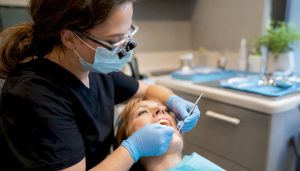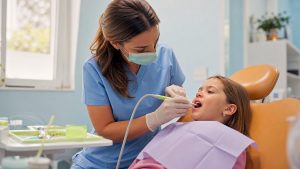
A dental hygienist is a licensed oral health professional who specialises in preventive care, clinical assessment, and patient education to maintain and improve dental health. Most patients think of their hygienist as the person who cleans their teeth. The actual role of dental hygienist goes much further, covering oral examinations, disease screening, X-rays, and behaviour counselling. The American Dental Hygienists’ Association (ADHA) and the Canadian Dental Hygienists Association (CDHA) both recognise dental hygiene diagnosis as a fundamental professional practice, not a secondary task. Understanding what your hygienist does helps you get more from every visit and feel confident in the care you receive.
What is the role of dental hygienist during a visit?
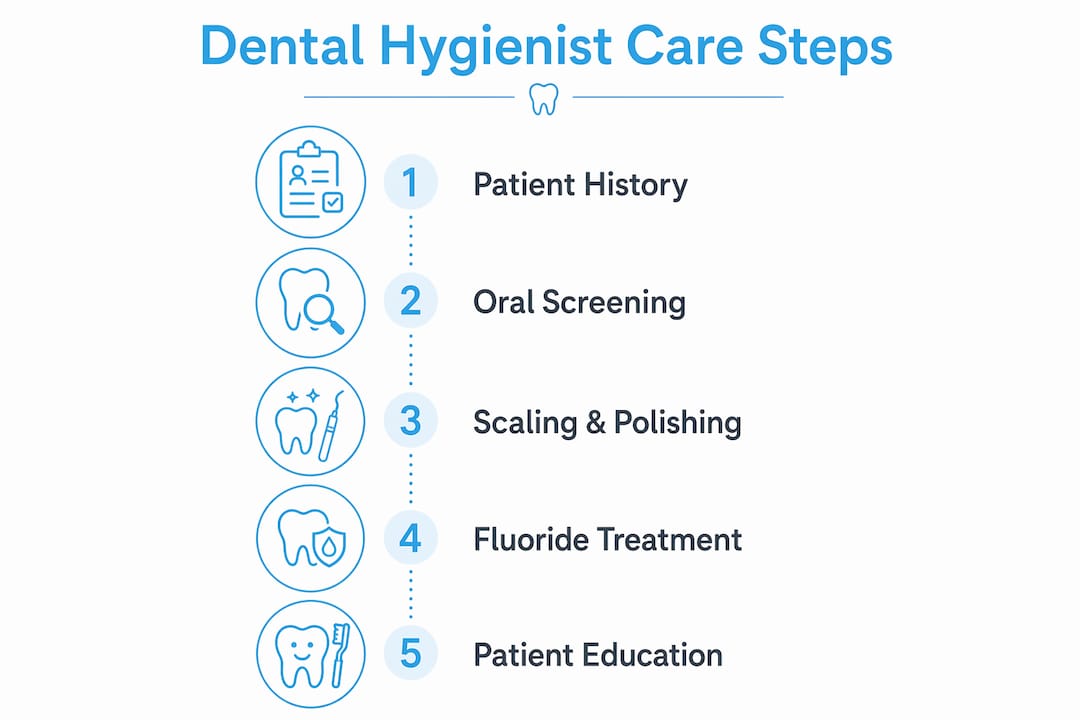
A dental hygienist’s duties during a typical appointment cover far more ground than polishing. Core hygienist tasks include reviewing your dental history, taking X-rays, removing plaque and calculus, checking for signs of oral disease, and teaching you how to care for your teeth at home. Each task connects to the next, building a complete picture of your oral health before the dentist steps in.
The responsibilities of dental hygienist during a clinical visit include:
- Oral examination and screening. The hygienist checks your gums, teeth, and soft tissues for signs of disease, inflammation, or abnormal changes, including early indicators of oral cancer.
- Scaling and root planing. Calculus (hardened plaque) is removed from above and below the gumline using hand instruments and ultrasonic scalers. This is the core of gum disease prevention.
- Dental X-rays. Hygienists take and, in many jurisdictions, interpret radiographs to identify decay, bone loss, and other issues not visible to the naked eye.
- Fluoride varnish and sealant application. These treatments protect enamel and are especially important for children and patients at higher risk of decay.
- Patient education. Hygienists teach brushing technique, flossing, and diet choices that affect oral health. This is not a brief chat. It is a structured part of care.
- Smoking cessation counselling. Behaviour-change counselling for tobacco use is a recognised part of the dental hygienist job description in Canada.
- Documentation and charting. Periodontal charts, X-ray findings, and health history notes are recorded at every visit to track changes over time.
Hygienists do not diagnose dental disease or plan restorative treatment. That responsibility belongs to the dentist. The hygienist’s assessment, however, directly informs what the dentist looks for and recommends.
Pro Tip: Before your next appointment, write down any changes you have noticed in your mouth, such as bleeding gums, sensitivity, or sore spots. Sharing this with your hygienist at the start of the visit helps them focus their assessment where it matters most.

How does scope of practice vary for hygienists across Canada?
The scope of practice for dental hygienists is not the same in every Canadian province. What your hygienist can do in Ontario may differ from what is permitted in Alberta or Nova Scotia. This matters because it affects the services available to you and whether a hygienist can see you without a dentist present.
The ADHA defines Full Practice Authority (FPA) as the ability to evaluate patients, diagnose within scope, order and interpret diagnostic tests, and initiate treatment, including prescribing in some areas. Not all Canadian provinces have adopted FPA, but the trend is moving in that direction.
| Practice setting | Dentist required? | Examples of permitted tasks |
|---|---|---|
| Traditional supervised practice | Yes | Cleaning, X-rays, fluoride, patient education |
| Independent practice (Ontario, B.C.) | No | Full hygiene assessment, scaling, sealants, some screenings |
| Full Practice Authority (FPA) | No | Diagnosis within scope, ordering tests, initiating treatment |
| Community and mobile settings | Varies by province | Preventive care, screenings, education in schools or care homes |
Ontario and British Columbia allow hygienists to practise independently in some settings, meaning they can provide care without a dentist on site. This expands access to dental hygiene services in rural areas, schools, and long-term care facilities. Patients in Dufferin County benefit from this flexibility, particularly those who find it difficult to attend a traditional dental office.
If you are unsure what your hygienist is permitted to do at your clinic, ask directly. The answer depends on your province and the specific practice setting. Knowing this helps you understand your options and plan your care accordingly.
How do dental hygienists work with dentists and other oral health professionals?
Dental hygienists and dentists work as a team, with each professional contributing a distinct set of skills. The hygienist typically sees the patient first, completing the assessment phase before the dentist conducts their examination. This structure makes the overall visit more efficient and thorough.
The collaboration works through a clear sequence:
- Initial assessment. The hygienist reviews health history, takes X-rays, and completes a full oral examination including periodontal charting.
- Documentation. Findings are recorded in detail. Periodontal charts and radiographs feed directly into the dentist’s diagnosis and treatment planning.
- Preventive and therapeutic treatment. The hygienist performs scaling, polishing, fluoride application, and patient education during the same appointment.
- Dentist review. The dentist uses the hygienist’s documented findings to conduct their own examination, identify any restorative needs, and discuss treatment options with the patient.
- Referral and follow-up coordination. If the hygienist identifies a concern, such as a suspicious lesion or significant bone loss, this is flagged for the dentist and may lead to a referral to a specialist.
This two-step process means the hygienist sets the foundation for the entire dental visit. Patients who feel comfortable with their hygienist often feel more at ease with the overall appointment. That comfort is not incidental. It is a deliberate part of patient-centred care.
Pro Tip: If you feel anxious about dental visits, tell your hygienist at the start of the appointment. Hygienists are trained to adjust their approach, explain each step, and work at a pace that feels manageable for you. You do not have to white-knuckle your way through a cleaning.
What practical benefits do patients get from dental hygienist care?
The importance of dental hygiene becomes clear when you look at what happens without it. Gum disease, tooth decay, and oral infections are largely preventable with regular professional care and good home habits. Dental hygienists are the primary providers of that preventive care.
Patients who see a hygienist regularly benefit in several concrete ways:
- Gum disease prevention. Scaling removes calculus that brushing and flossing cannot reach. Left in place, calculus causes gum inflammation, bone loss, and eventually tooth loss.
- Early detection. Hygienists screen for oral cancer, gum disease, and decay at every visit. Catching these conditions early means simpler, less invasive treatment.
- Fewer dental emergencies. Preventive therapy and behaviour counselling reduce the likelihood of acute infections, abscesses, and broken teeth that require urgent care.
- Systemic health connections. Gum disease is linked to cardiovascular disease, diabetes, and respiratory conditions. Hygienists who provide tobacco cessation counselling address oral-systemic risks directly.
- Personalised home-care plans. Every patient leaves with specific advice tailored to their mouth, not a generic pamphlet. This makes home care more effective.
- Confidence and comfort. A clean, healthy mouth affects how you feel about your smile. Patients who receive consistent hygiene care report greater confidence in their appearance and less anxiety about dental visits over time.
The skills required for dental hygienists go well beyond manual dexterity. Effective communication, patient assessment, and clinical judgement are all part of the role. A hygienist who explains what they are finding, and why it matters, gives you the knowledge to take better care of your own oral health between visits. You can also find expert oral hygiene tips to support your daily routine at home.
Key takeaways
Dental hygienists are licensed oral health professionals whose work spans preventive care, clinical assessment, patient education, and collaborative treatment planning, making them central to maintaining long-term oral health.
| Point | Details |
|---|---|
| Core duties are broad | Hygienists perform scaling, X-rays, oral screenings, fluoride application, and patient education at every visit. |
| Scope varies by province | Ontario and B.C. allow independent practice; Full Practice Authority expands what hygienists can do without a dentist present. |
| Team-based care works in sequence | Hygienists complete assessments and documentation that directly inform the dentist’s diagnosis and treatment plan. |
| Prevention reduces long-term costs | Regular hygiene care lowers the risk of gum disease, decay, emergencies, and systemic health complications. |
| Education is part of the treatment | Personalised home-care advice and behaviour counselling are clinical services, not optional extras. |
Preventive dental hygiene care in Orangeville
At Healthysmiledentalhygiene in Orangeville, the dental hygiene team provides the full range of preventive and therapeutic services described in this article, from thorough oral assessments and scaling to fluoride treatments and patient education. The focus is on making every patient feel comfortable, informed, and supported, whether you are visiting for the first time or returning for your regular care.

Healthysmiledentalhygiene’s prevention-first dental services are designed for families, adults, and seniors across Dufferin County. If you want to understand what to expect before your first visit, the team’s first visit guide walks you through every step. Book a visit with the Orangeville team and let your hygienist help you build a healthier, more confident smile.
FAQ
What does a dental hygienist do at a typical appointment?
A dental hygienist reviews your health history, takes X-rays, performs scaling and polishing, screens for oral disease, applies fluoride or sealants if needed, and provides personalised home-care advice. The full appointment covers both treatment and education.
Is a dental hygienist the same as a dentist?
No. A dental hygienist focuses on preventive care, assessment, and patient education, while a dentist diagnoses dental disease and performs restorative or surgical treatment. The two roles work together as a clinical team.
Can a dental hygienist work without a dentist in Ontario?
Yes. Ontario allows dental hygienists to practise independently in some settings, meaning they can provide hygiene services without a dentist on site. This is common in community clinics, schools, and long-term care facilities.
How often should I see a dental hygienist?
Most patients benefit from a hygiene visit every six months, though your hygienist may recommend more frequent appointments if you have gum disease, a history of decay, or other risk factors. Your visit frequency should be based on your individual oral health needs.
Does a dental hygienist perform oral cancer screening?
Yes. Oral cancer screening is a standard part of the hygienist’s oral examination. The hygienist checks the soft tissues of the mouth, tongue, and throat for any abnormal changes and flags concerns for the dentist to review.
Recommended
- Oral Hygiene Hacks: Orangeville’s Expert Tips – Healthy Smile Dental Hygiene | Dentist Orangeville | Invisilign
- Prevention First: Leading Dentistry Services in Orangeville – Healthy Smile Dental Hygiene | Dentist Orangeville | Invisilign
- Oral Health 101: Educational Resources from Orangeville Dentists – Healthy Smile Dental Hygiene | Dentist Orangeville | Invisilign