For most adults, a soft-bristled brush with a compact head is the safest and most effective starting point. The Canadian Dental Association (CDA) recommends soft, rounded nylon bristles because they remove plaque without damaging enamel or causing gum recession over time. If you tend to rush through brushing, press too hard, or have limited hand mobility, an oscillating-rotating electric brush adds a meaningful clinical edge.
Your quick deciding checklist:
- Bristle softness: Choose soft and rounded, always. Medium and firm bristles carry a real risk of enamel wear and gum recession.
- Head size: Compact heads reach back molars more comfortably than full-size heads in most adult mouths.
- Handle grip: Look for a non-slip texture or a slightly wider handle if you find your current brush slipping during use.
- Manual vs. electric: Consider electric if you brush aggressively, rush, or have dexterity challenges.
- Replacement interval: Plan to swap your brush regularly, or sooner if bristles splay.
Oscillating-rotating electric toothbrushes reduce plaque by up to 21% and gingivitis by up to 11% more than manual brushes after roughly three months of consistent use. That said, the CDA endorses both manual and electric brushes as safe and effective when used correctly.
1. How to evaluate toothbrush features that actually affect cleaning
Choosing the right brush starts with understanding what each physical feature actually does for your mouth, not just what the packaging claims.
Table of Contents
- Key takeaways
- Your personalised toothbrush review at Healthysmiledentalhygiene
- Trusted sources and further reading
- FAQ
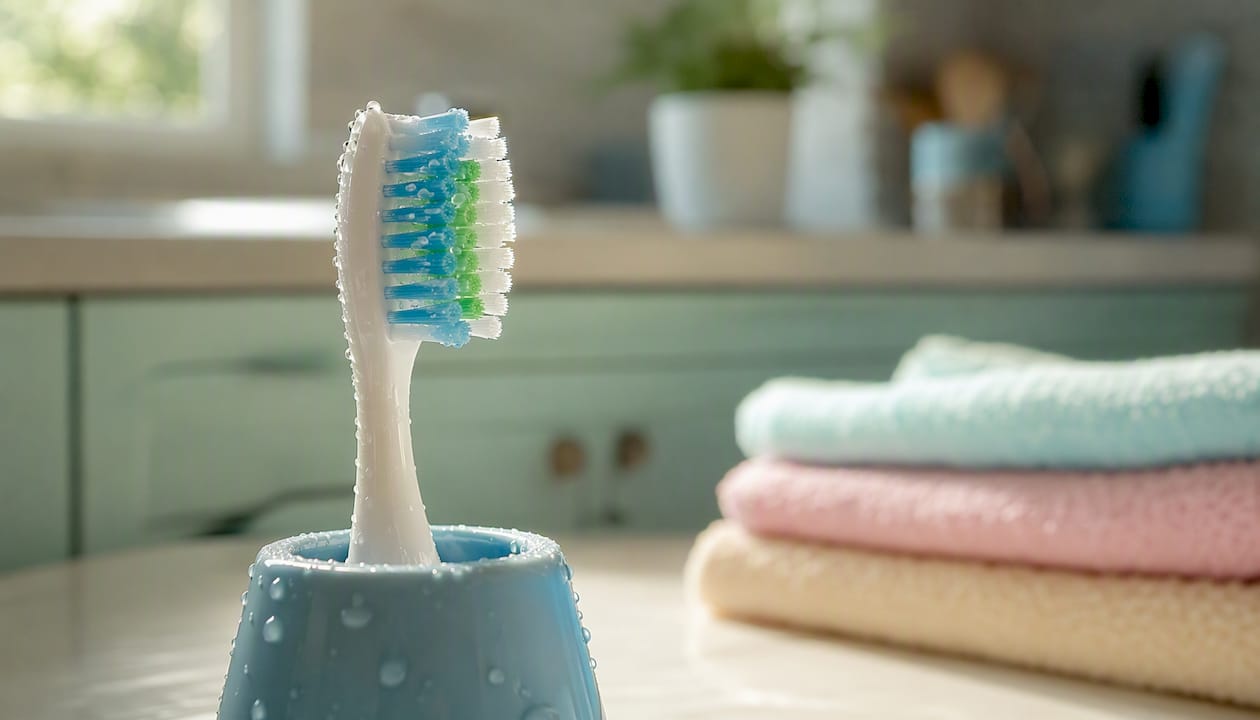
Bristle softness and shape
Soft, rounded nylon bristles are the default recommendation from the CDA for a clear reason: plaque is soft and lifts away easily with gentle pressure. Firm or medium bristles do not clean better; they simply scrub harder, which gradually wears enamel and pushes gum tissue down. If you see “medium” or “firm” on a package, put it back.
Head size and shape
A compact head, roughly the size of two of your back teeth side by side, fits most adult mouths well. To test fit at home, open wide and try to angle the brush comfortably behind your lower back molars. If you have to strain or the brush head feels crowded, it is too large. Some brands offer “compact” and “full-size” variants of the same model; the compact version is almost always the better choice for adults.
Handle and neck design
An angled or slightly offset neck helps you hold the brush at the recommended 45° angle to the gumline without awkward wrist contortion. Non-slip rubber grips on the handle reduce the tendency to over-grip and scrub. A wider handle diameter is particularly helpful for adults with arthritis or reduced grip strength.
Materials and environmental considerations
Most toothbrush handles are made from polypropylene or ABS plastic. Look for a label confirming BPA-free materials if that matters to you. For adults mindful of waste, electric brushes with replaceable heads generate less plastic per year than disposing of a full manual brush every three months. Fully biodegradable bamboo handles with plant-based bristles are available, though bristle softness and durability can vary between brands; check that the bristles are still rated soft and rounded before buying.
Five quick in-store checks:
| Check | What to look for |
|---|---|
| Bristle label | “Soft” or “Extra-soft” only |
| Head size | Compact; covers roughly two back teeth |
| Bristle tips | Rounded or polished ends (check packaging) |
| Handle grip | Non-slip texture or rubber inlay |
| BPA-free label | Present on packaging |
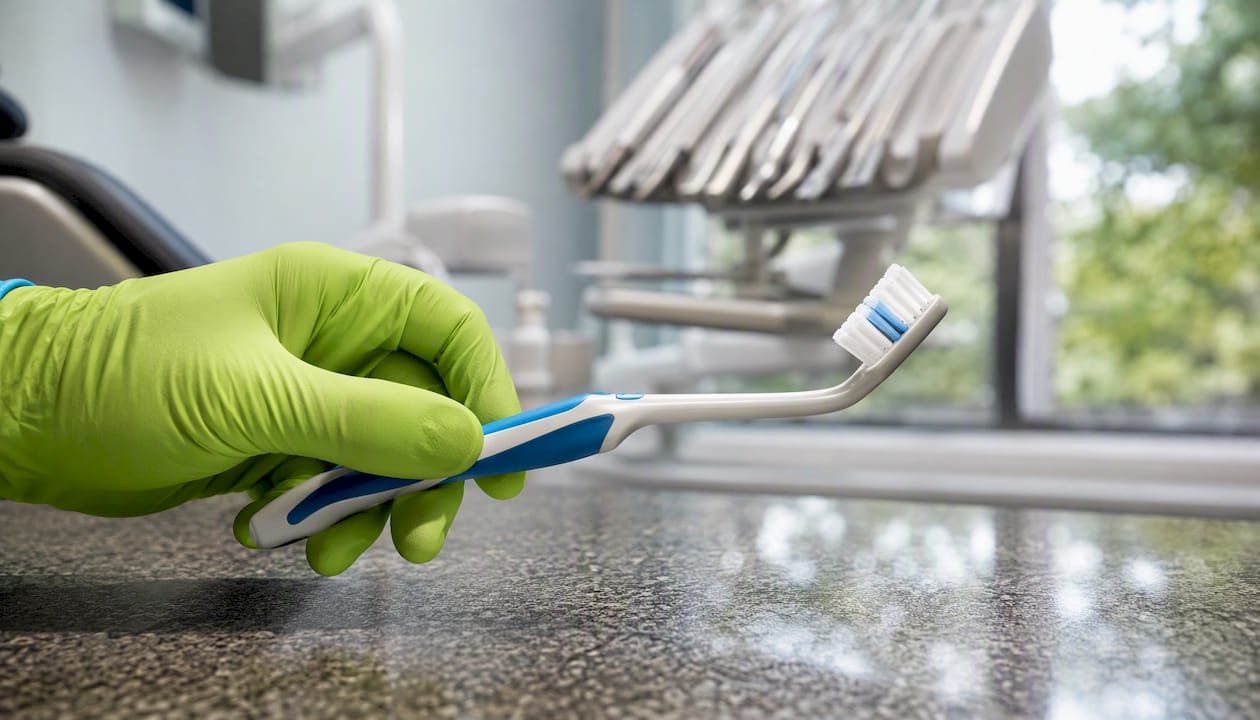
Pro Tip: Bring your current toothbrush to your next hygiene appointment. Your dental hygienist can read the wear pattern on the bristles and tell you immediately whether your head size, bristle type, or brushing angle needs adjusting — no guesswork required.
2. Manual versus electric: what the evidence actually says
The clinical case for powered brushes is real, but it comes with an important qualifier.
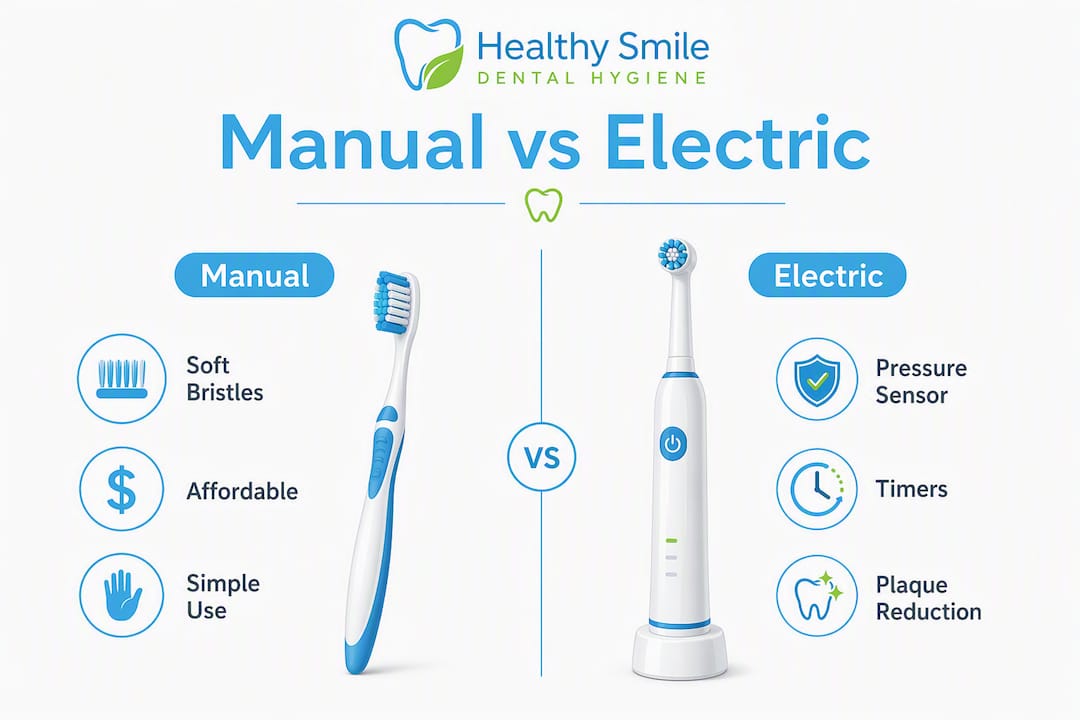
Oscillating-rotating electric toothbrushes reduce plaque by up to 21% and gingivitis by up to 11% more than manual brushes over roughly three months of consistent use. That advantage is meaningful, particularly for adults managing early gum disease or persistent plaque build-up. Sonic brushes vibrate at high frequency and can also be effective, though the strongest systematic review evidence centres on oscillating-rotating models specifically.
At the same time, a manual brush used gently and thoroughly for two minutes, twice daily can match an electric brush’s results for adults with good technique. The brush is the tool; the habit is what drives the outcome.
Who benefits most from an electric brush
- Adults who tend to press too hard (a pressure sensor stops the scrubbing reflex)
- People who rush and brush for under 90 seconds (a two-minute timer with 30-second quadrant alerts corrects this)
- Those with limited dexterity, arthritis, or reduced grip strength
- Orthodontic patients cleaning around brackets and wires
- Anyone with persistent gingivitis despite regular brushing
Electric features worth paying for
Pressure sensors and built-in timers function as low-effort behavioural nudges that genuinely improve outcomes for people who brush too hard or too briefly. Quadrant alerts every 30 seconds help you spend equal time on all four sections of your mouth. Replacement head availability and cost are practical factors too: an otherwise excellent handle becomes a burden if compatible heads are difficult to find locally or cost more than a new manual brush each month.
| Feature | Manual brush | Oscillating-rotating electric |
|---|---|---|
| Plaque reduction | Effective with good technique | Up to 21% greater reduction vs. manual |
| Gingivitis reduction | Effective with good technique | Up to 11% greater reduction vs. manual |
| Pressure control | Relies on user awareness | Built-in sensor stops over-scrubbing |
| Brushing timer | None | Two-minute timer with 30-second alerts |
| Dexterity support | Requires wrist control | Handle does most of the work |
| Ongoing cost | Low (replace brush every 3 months) | Higher upfront; replacement heads ongoing |
Brands such as Oral-B and Colgate offer oscillating-rotating and sonic models across a wide price range; GUM / Sunstar produces both manual and powered options designed with gum sensitivity in mind. These are useful reference points when comparing features in-store, not endorsements of one over another.
3. Choosing a brush when you have sensitivity, braces, implants, or limited dexterity
Special oral health situations call for a more targeted approach to selecting a toothbrush.
Sensitive teeth and gum recession
Soft bristles are non-negotiable here. An electric brush with a pressure sensor is particularly helpful because sensitivity often worsens when people unconsciously scrub harder trying to feel “clean.” Gentle, short strokes at a 45° angle to the gumline protect exposed root surfaces without further irritation.
Braces and fixed orthodontics
Brackets and wires create dozens of small surfaces where plaque hides. A round, compact electric head can navigate around brackets more efficiently than a flat manual brush. Some manual brushes are designed with a V-shaped bristle trim specifically for orthodontic appliances. Interdental brushes and water flossers are important adjuncts, but the primary brush still needs to be soft-bristled and compact-headed.
Dental implants and prosthetics
Implant crowns and bridges require soft, gentle cleaning along the gumline to protect the attachment and surrounding tissue. Avoid stiff bristles entirely. A compact head that can angle under the gumline without aggressive pressure is the priority; technique matters as much as the tool.
Limited dexterity or arthritis
Electric toothbrushes with wide, ergonomic handles and simple one-button operation are the most practical option. The oscillating head does the cleaning motion for you, which reduces the wrist and finger movement required. Long battery life matters too: a brush that needs charging every two days is a friction point that can disrupt the habit. Check that replacement heads are widely available before committing to a handle.
Pro Tip: Before buying, hold the brush handle in your dominant hand and mimic the brushing motion. If your wrist feels strained or the head feels too large to angle comfortably, try a different model. A few seconds of testing in the store saves weeks of frustration at home.
For personalised guidance on oral hygiene habits that fit your specific situation, your dental hygienist is the best resource.
4. When to replace your toothbrush and how to store it properly
Replacement timing and storage habits directly affect how well your brush cleans and how safe it is to use.
The CDA recommends replacing your toothbrush every three months because worn bristles lose their cleaning effectiveness and can irritate gum tissue. Replace sooner if you notice splaying or fraying before the three-month mark; that wear pattern is a sign of excessive pressure, not just time.
Replace your brush immediately after recovering from a cold, flu, or oral infection to avoid reintroducing microbes to a healing mouth.
| Situation | Action |
|---|---|
| Three months of regular use | Replace the full brush or the head |
| Bristles visibly splayed or frayed | Replace immediately; review brushing pressure |
| After cold, flu, or oral infection | Replace immediately |
| After a mouth sore or strep throat | Replace immediately |
Storage and cleaning habits
Rinse your brush thoroughly under running water after every use to remove toothpaste and debris. Stand it upright in an open holder so air circulates around the bristles; a brush that stays damp in a closed container or travel cap for extended periods provides a better environment for microbial growth. Avoid storing multiple brushes with their heads touching.
Splayed bristles appearing within a few weeks of a new brush are a red flag for technique, not a defective product. Aggressive horizontal scrubbing causes rapid bristle splaying and gum recession; switching to gentle circular strokes at a 45° angle resolves the problem quickly.
For electric brushes, replacing only the head every three months rather than the entire handle reduces plastic waste considerably. Most major brands sell replacement heads in multi-packs, which lowers the per-head cost.
5. What Canadian dental bodies recommend for adult toothbrush selection
Canadian clinical guidance on toothbrush selection is consistent across the major authorities, and it is worth knowing the baseline before you buy.
- Bristle type: The CDA recommends soft, rounded bristles for all adults. Medium and firm bristles are not recommended for routine use.
- Brushing duration: Brush for two minutes, twice daily. The CDA and Health Canada both reinforce this, with the practical tip of spending 30 seconds on each quadrant of your mouth.
- Fluoride toothpaste: Use a fluoride toothpaste every time you brush. Do not rinse with water immediately after brushing; spit out the excess to let the fluoride continue working.
- Replacement interval: Every three months, or sooner when bristles show wear.
- Technique: Hold the brush at a 45° angle to the gumline and use gentle strokes rather than horizontal scrubbing.
At a hygiene visit, your dental hygienist will often go further than the general guidelines. They may recommend a specific head size based on your arch width, suggest an electric model with a pressure sensor if they see recession, or demonstrate the correct wrist angle for your particular bite. General guidelines give you the foundation; a clinical visit gives you the fit.
6. Bring your toothbrush to your next hygiene visit for a custom fit check
One of the most practical steps you can take after reading this guide is to bring your current toothbrush, or a photo of it, to your next hygiene appointment.
Dental hygienists are trained to read bristle wear patterns the way a mechanic reads tyre wear. What they look for:
- Splayed or bent bristles: Indicate excessive pressure or an incorrect angle, both of which can cause gum recession over time.
- Uneven wear across the head: Suggests the brush is not reaching all surfaces equally, often a sign of head size mismatch.
- Wear concentrated on one side: Points to a dominant scrubbing habit that can be corrected with a simple technique adjustment.
- Overall bristle condition at three months: Confirms whether your replacement schedule is appropriate.
From that assessment, your hygienist can recommend a specific head size, a different bristle type, a handle with better grip, or an electric model with pressure control. That conversation takes two minutes and produces a recommendation tailored to your actual mouth, not a general average.
At Healthysmiledentalhygiene in Orangeville, the hygiene team welcomes patients who want to bring their brush for a quick review. It is a natural part of a dental checkup and one of the simplest ways to get a personalised answer to the question of which brush actually fits you.
Key takeaways
For most adults, a soft-bristled brush with a compact head used for two minutes twice daily covers the essentials; add an oscillating-rotating electric brush when dexterity, pressure control, or persistent gingivitis is a concern.
| Point | Details |
|---|---|
| Soft bristles are the standard | The CDA recommends soft, rounded bristles for all adults to protect enamel and gums. |
| Compact head fits most mouths | A smaller head reaches back molars comfortably; test fit before buying. |
| Electric brushes offer a measurable edge | Oscillating-rotating models reduce plaque by up to 21% and gingivitis by up to 11% vs. manual. |
| Replace regularly | Worn bristles clean less effectively; replace sooner after illness or if bristles splay. |
| Healthysmiledentalhygiene can personalise your choice | Bring your brush to a hygiene visit in Orangeville for a wear-pattern review and tailored recommendation. |
Your personalised toothbrush review at Healthysmiledentalhygiene
Picking the right brush from a shelf is one thing; knowing it actually fits your mouth is another.

At Healthysmiledentalhygiene in Orangeville, the hygiene team offers more than a professional cleaning. During a dental cleaning appointment, your hygienist can review your current brush, assess your technique, and give you a concrete recommendation on head size, bristle type, and whether a powered option would genuinely benefit you. Patients across Orangeville and Dufferin County find that a single conversation at a hygiene visit answers questions that no buying guide can fully resolve. If you are ready to feel confident about your home-care routine, book a hygiene visit with our team and bring your toothbrush along.
Trusted sources and further reading
The recommendations in this article draw from the following Canadian and clinical authorities.
- Canadian Dental Association — Brushing and Flossing Guidance: Primary Canadian authority on bristle type, brushing duration, technique, and replacement interval.
- Canadian Dental Association — Oral Health Main Guidance: Broader CDA oral health recommendations including replacement timing.
- Health Canada — Smile: Healthy Teeth, Healthy Body: Federal guidance on brushing frequency, duration, and fluoride use for Canadians.
- Dental Health Foundation — Electric vs. Manual Toothbrushes: Clinical evidence summary on oscillating-rotating brush effectiveness versus manual.
| Source | Why it matters |
|---|---|
| Canadian Dental Association | National clinical authority; sets the standard for bristle type, technique, and replacement |
| Health Canada | Federal public health guidance; reinforces brushing duration and fluoride recommendations |
| Dental Health Foundation | Summarises systematic review evidence on electric vs. manual brush outcomes |
FAQ
What toothbrush do dentists actually recommend for adults?
The CDA recommends a soft-bristled brush with a compact head for most adults, used at a 45° angle for two minutes twice daily. An oscillating-rotating electric brush is often suggested for patients with persistent plaque, gum concerns, or limited dexterity.
How do I choose the right toothbrush for my mouth?
Start with soft bristles and a compact head that reaches your back molars comfortably, then decide between manual and electric based on your brushing habits and any special needs such as sensitivity, braces, or arthritis.
How often should I replace my toothbrush?
The CDA recommends replacing every three months, or immediately when bristles splay or fray, and right after recovering from a cold, flu, or oral infection.
What is the ideal brushing routine for an adult?
Brush for two minutes, twice daily, using a fluoride toothpaste and spending roughly 30 seconds on each quadrant of your mouth, as recommended by both the CDA and Health Canada.
Can a dental hygienist help me pick the right toothbrush?
Yes. Bringing your current brush to a hygiene appointment allows your hygienist to read wear patterns and give you a personalised recommendation on head size, bristle type, and whether an electric model would help. The team at Healthysmiledentalhygiene in Orangeville offers exactly this kind of guidance during a routine hygiene visit.
Recommended
- Dental hygiene habits best practices: your 2026 family guide
- Tips to Keep Your Teeth White – Healthy Smile Dental Hygiene
- How Often Should Kids Brush and Floss? The Routine Every Orangeville Child Needs – Healthy Smile Dental Hygiene | Dentist Orangeville | Invisilign
- Why teeth need professional cleaning: your complete guide