An antibacterial mouth rinse used after a professional dental cleaning is a short-term adjunct designed to reduce the bacterial load in your mouth, help control bleeding and inflammation, and support tissue healing. It does not replace brushing or flossing — it works alongside them.
- When it’s typically used: after scaling and root planing (SRP), periodontal therapy, tooth extractions, oral surgery, or for patients at higher risk of infection or with persistent gum inflammation.
- How to use it: start as directed by your clinician, swish 15 mL for about 30 seconds, then spit. Do not swallow.
- Key timing rule: avoid eating or drinking for 30 minutes after use, and wait at least 30 minutes after brushing before using chlorhexidine-based rinses.
Understanding the role of antibacterial rinse after cleaning helps you get the most from your recovery and avoid common mistakes like rinsing too soon or choosing the wrong product.
Key takeaways
An antibacterial mouth rinse is a short-term adjunct after professional dental cleaning — most effective when used correctly, for the right duration, and as part of a broader oral hygiene routine.
| Point | Details |
|---|---|
| Rinse is an adjunct, not a replacement | Mechanical brushing and flossing remain the foundation; a rinse supports but cannot substitute them. |
| Chlorhexidine is the clinical benchmark | At 0.12%–0.2%, it is prescribed short-term for moderate–severe gingivitis and post-procedural care. |
| Timing and duration matter | Use 15 mL for 30 seconds, wait 30 minutes after brushing, and avoid food or drink for 30 minutes after rinsing. |
| Check for DIN or NPN in Canada | Health Canada identifiers confirm a product has been reviewed for safety and efficacy before you buy. |
| Healthysmiledentalhygiene supports your recovery | Our Orangeville team provides personalised aftercare, prescription rinse guidance, and follow-up stain removal. |
Table of Contents
- What is an antibacterial mouth rinse and what’s in it?
- Why your clinician may recommend a rinse after cleaning
- Who should use one and who should be cautious
- How to use an antibacterial rinse after your cleaning
- Side effects and how to reduce them
- What the research actually shows
- Choosing a rinse in Canada: prescription, OTC, and what to check on the label
- Aftercare tips from the Healthysmiledentalhygiene team in Orangeville
- Healthysmiledentalhygiene is here for your aftercare in Orangeville
- Sources
- FAQ
What is an antibacterial mouth rinse and what’s in it?
An antibacterial (or antimicrobial) mouth rinse is an adjunctive chemotherapeutic oral rinse — a product designed to reduce the number of bacteria in the mouth when mechanical cleaning alone is not enough. The word “adjunctive” is key: these rinses support your brushing and flossing routine; they do not replace it.
Several active ingredients appear across prescription and over-the-counter (OTC) products. Each works differently, and knowing which one you have helps you use it correctly.
- Chlorhexidine gluconate (0.12%–0.2%): the clinical benchmark for short-term antibacterial use. It binds to oral tissues and releases slowly over 7–12 hours, a property called substantivity, which gives it lasting effect after a single rinse. Available in Canada by prescription (e.g., PrChlorhexidine, ORO CLEAR). The CDHA position paper and the antimicrobial mouthwash review on PMC both confirm it is bactericidal at higher concentrations and bacteriostatic at lower ones.
- Cetylpyridinium chloride (CPC): a quaternary ammonium compound found in many OTC rinses. Milder than chlorhexidine, with a shorter duration of action, but suitable for daily maintenance use.
- Essential oils (EOs): a fixed combination of thymol, eucalyptol, menthol, and methyl salicylate, found in products like Listerine (widely available in Canadian pharmacies). Long-term trials support their use for reducing plaque and gingival inflammation as OTC adjuncts.
- Hydrogen peroxide (1.5%–3%): found in OTC preparations such as Peroxyl-type rinses. Releases oxygen to disrupt anaerobic bacteria and can help with minor wound care after extractions.
- Povidone-iodine: used clinically and in some operative settings. Broad-spectrum antimicrobial, but requires caution in patients with thyroid conditions.
- Alcohol-containing vs. alcohol-free formulations: alcohol acts as a solvent and mild antiseptic but can cause mucosal dryness and irritation. Alcohol-free versions are preferable for patients with dry mouth, mucosal sensitivity, or those in recovery from alcohol use.
Prescription vs. OTC: chlorhexidine gluconate rinses require a prescription in Canada. CPC, EO-based rinses, and hydrogen peroxide preparations are widely available OTC.
Pro Tip: When buying an OTC rinse in Canada, look for a Drug Identification Number (DIN) or Natural Product Number (NPN) on the label. These Health Canada identifiers confirm the product has been reviewed for safety and efficacy — if neither appears, choose a different product.
Why your clinician may recommend a rinse after cleaning
After a professional cleaning, especially a deeper procedure like scaling and root planing, the gum tissue is temporarily more vulnerable. Bacteria that were disrupted during the procedure can recolonise quickly, and inflamed tissue heals more slowly when bacterial levels remain high.
An antibacterial rinse used in the days following cleaning addresses this window of vulnerability in several ways:
- Reduces bacterial load: limits the number of bacteria that can recolonise cleaned root surfaces and gum pockets immediately after treatment.
- Helps control bleeding and gingival inflammation: chlorhexidine is specifically indicated for moderate to severe gingivitis and for managing associated bleeding, as noted in the Health Canada drug monograph for PrChlorhexidine.
- Lowers postoperative infection risk: particularly relevant after tooth extractions, minor oral surgery, or for immunocompromised patients or those with systemic conditions affecting healing.
- Delays plaque regrowth: gives cleaned surfaces a brief protected period before plaque begins to reform.
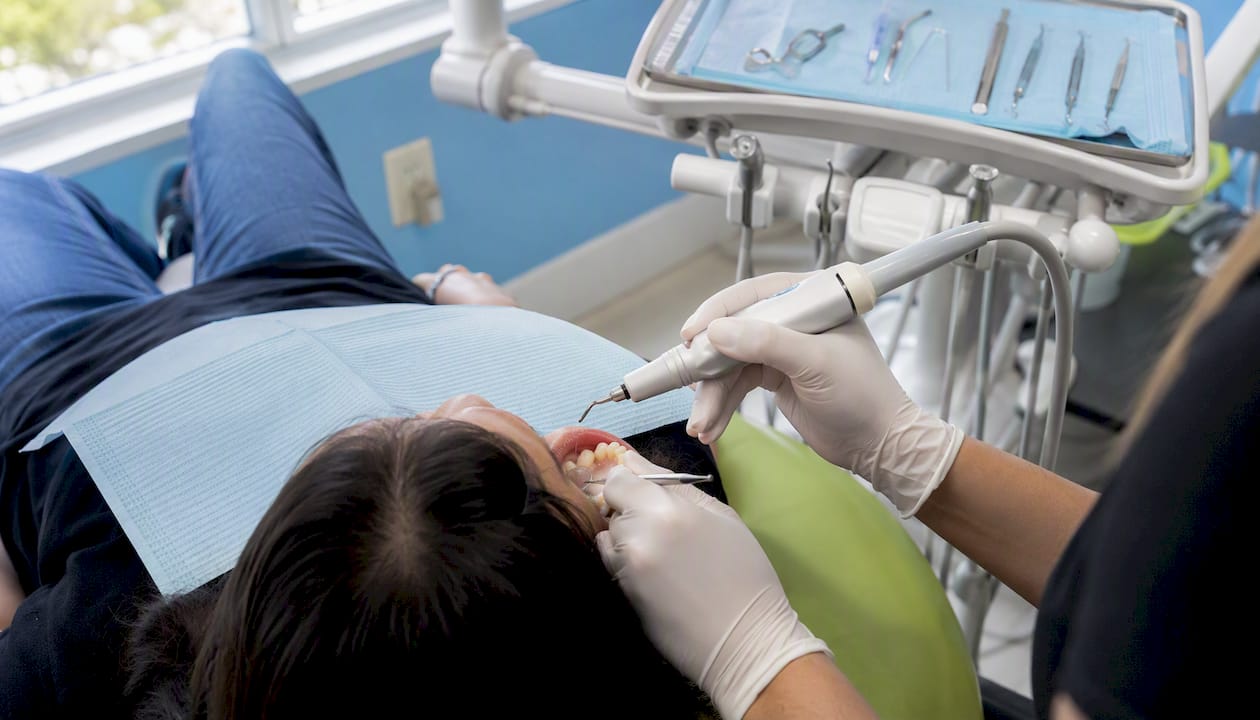
Clinical examples where a rinse is commonly recommended include SRP, full-mouth periodontal debridement, post-extraction care, and cases where a patient has difficulty with mechanical plaque control due to limited dexterity or appliances.
What rinses do not do is equally worth stating clearly. They cannot remove established plaque biofilm — that requires physical disruption through brushing and interdental cleaning. Relying on a rinse alone will not prevent disease progression. The CDHA position paper is explicit on this point: chemotherapeutic rinses are adjuncts to mechanical plaque control, not substitutes for it. Good dental hygiene habits remain the foundation.
Who should use one and who should be cautious
Not every patient who has a cleaning needs an antibacterial rinse. Your clinician will assess whether one is appropriate based on your procedure, your health history, and your healing response.
Common indications:
- Scaling and root planing or full periodontal debridement
- Moderate to severe gingivitis with bleeding on probing
- Postoperative care after tooth extractions or minor oral surgery
- Immunocompromised patients or those with systemic conditions that affect healing
- Persistent inflammation or heavy bleeding after a routine cleaning
- Patients with limited ability to perform effective mechanical plaque removal
Contraindications and cautions:
- Known allergy to chlorhexidine or any other active ingredient
- Thyroid disease: povidone-iodine can affect thyroid function and requires medical guidance
- Children: most prescription rinses are not indicated for young children; ask your clinician
- Pregnancy and breastfeeding: clinical advice is needed before using any prescription rinse
- Severe dry mouth or mucosal sensitivity: alcohol-containing rinses may worsen these conditions
A note on interactions: chlorhexidine can be inactivated by sodium lauryl sulphate (SLS), a foaming agent found in many toothpastes. Rinsing with chlorhexidine immediately after brushing with an SLS-containing toothpaste reduces its effectiveness. Wait at least 30 minutes after brushing before using a chlorhexidine rinse. Similarly, avoid mixing rinses or using multiple antiseptic products at the same time unless your clinician has specifically advised it.
If you are unsure whether a rinse is right for you, a trusted dental professional can review your health history and recommend the safest option.
How to use an antibacterial rinse after your cleaning
Proper use of an antibacterial rinse matters as much as choosing the right one. Using it at the wrong time or for too long can reduce its effectiveness or increase side effects.
- Start as directed. Your clinician will tell you when to begin — usually the same day as your cleaning or the following morning, depending on the procedure.
- Measure 15 mL. Most prescription chlorhexidine rinses come with a measuring cap. Use the full 15 mL dose as indicated in the Health Canada drug monograph.
- Swish for 30 seconds. Move the rinse around your whole mouth, including between teeth and along the gumline. Set a timer if needed — 30 seconds is longer than it feels.
- Spit completely. Do not swallow. Swallowing is not harmful in small amounts, but it is not intended and offers no additional benefit.
- Wait 30 minutes before eating, drinking, or rinsing with water. This allows the active ingredient to remain in contact with oral tissues and reach its full effect.
- Wait at least 30 minutes after brushing before using chlorhexidine. Toothpaste ingredients, particularly SLS, can neutralise the active ingredient if you rinse too soon after brushing.
- Use twice daily (morning and evening) unless your clinician specifies otherwise.
- Follow the prescribed duration. Most short-term courses run 1–2 weeks. Some clinicians use a one-week-on, one-week-off pattern to balance efficacy with staining risk.
Duration for OTC rinses: EO-based and CPC rinses can be used for longer-term maintenance, but always follow label instructions and check in with your dental team at your next visit.
Pro Tip: If you are on a chlorhexidine course, switch to a toothpaste without SLS for the duration. This preserves the rinse’s effectiveness and reduces the chance of a bitter taste reaction. Your hygienist can recommend a suitable option at your next visit.
Side effects and how to reduce them
Antibacterial rinses are generally well tolerated for short courses, but side effects are real and worth knowing about before you start.
Common side effects:
- Tooth and tongue staining: the most frequently reported issue with chlorhexidine. Brown or yellowish discolouration can appear on teeth, the tongue, and restorations after even a short course. It is not permanent — professional stain removal at a follow-up visit resolves it.
- Altered taste: a temporary metallic or bitter taste is common, particularly with chlorhexidine. It usually resolves within days of stopping the rinse.
- Mucosal irritation: some patients notice mild soreness or a burning sensation, more often with alcohol-containing formulations.
- Dry mouth: alcohol-based rinses can worsen dryness, especially in patients who already experience it. Choosing an alcohol-free formulation reduces this risk.
Less common concerns:
- Topical iodine absorption with povidone-iodine rinses, which is why thyroid patients need medical guidance before use.
- Allergic reactions to any active ingredient, though rare.
- Interactions with other oral products (see the timing guidance above regarding SLS).
Minimisation tips:
- Keep courses short and clinician-supervised.
- Book a follow-up visit for professional stain removal after a chlorhexidine course.
- Choose alcohol-free if you have dry mouth or mucosal sensitivity.
- Avoid abrasive whitening toothpastes during a chlorhexidine course, as they can worsen staining.
When to contact your dental team: reach out if you experience severe irritation or swelling, signs of an allergic reaction (rash, hives, difficulty breathing), persistent or worsening bleeding, or any signs of infection such as increasing pain, swelling, or discharge.
What the research actually shows
The evidence for antibacterial rinses as adjuncts after professional cleaning is positive but nuanced. No single rinse is a cure-all, and the strength of the benefit depends on the clinical situation and how the antiseptic is delivered.
A systematic review published in PMC found that adjuvant antiseptics can provide additional clinical advantage over SRP alone, with improvements in probing depth, clinical attachment level, and bleeding on probing. The review also found that delivery vehicle matters significantly: sustained-release local delivery forms (gels, chips, varnish placed directly into the pocket) showed stronger clinical improvements than simple liquid rinsing in many trials. Liquid rinses still provide benefit, but the effect is more modest.
Chlorhexidine remains the clinical benchmark for short-term efficacy. Its substantivity, the ability to bind to oral tissues and release slowly over 7–12 hours, gives it a lasting antimicrobial effect that other rinses do not match for short-term prescription use.
For long-term OTC maintenance, the picture shifts. The CDHA position paper notes that certain OTC essential-oil rinses have demonstrated reductions in plaque and gingival inflammation in long-term trials, making them a reasonable choice for ongoing home care between professional visits.
Key limitations to keep in mind:
- Study populations and protocols vary widely, making direct comparisons difficult.
- Most rinse trials measure short-term outcomes; long-term data on liquid rinses alone is limited.
- Rinses are consistently described as adjuncts, not primary treatments. The antimicrobial mouthwash review confirms that both bactericidal and bacteriostatic mechanisms are at work across different formulations, but mechanical plaque removal remains the foundation of care.
Choosing a rinse in Canada: prescription, OTC, and what to check on the label
Canadian patients have access to a range of antibacterial rinses, but knowing which one to choose — and whether you need a prescription — makes a real difference in outcomes.
Checklist for Canadian consumers:
- Check the active ingredient and its concentration (e.g., 0.12% chlorhexidine gluconate).
- Look for a DIN (Drug Identification Number) or NPN (Natural Product Number) issued by Health Canada. These confirm the product has been reviewed for safety and efficacy.
- Check the alcohol content if you have dry mouth or mucosal sensitivity.
- Read the intended use on the label — some rinses are for cosmetic freshening only, not therapeutic use.
Comparing the main active categories:
| Active ingredient | Typical clinical indication | Side effects | Recommended duration | Prescription or OTC in Canada |
|---|---|---|---|---|
| Chlorhexidine gluconate (0.12%–0.2%) | Moderate–severe gingivitis, post-SRP, postoperative care | Staining, taste change, mucosal irritation | Short-term (1–2 weeks, clinician-directed) | Prescription (DIN required) |
| Essential oils (EOs) | OTC maintenance, mild–moderate gingivitis | Mild burning, alcohol content in some | Long-term OTC maintenance | OTC (NPN or DIN) |
| Cetylpyridinium chloride (CPC) | OTC maintenance, plaque control | Mild staining, taste change | Long-term OTC maintenance | OTC (NPN or DIN) |
| Hydrogen peroxide (1.5%–3%) | Post-extraction wound care, minor oral surgery | Mild irritation, temporary whitening effect | Short-term, as directed | OTC (NPN or DIN) |
| Povidone-iodine | Clinical/operative use, high-risk patients | Iodine absorption risk, taste | Short-term, clinician-directed | Clinician-directed |
Where to get a prescription rinse in Canada: your dentist or dental hygienist can prescribe chlorhexidine gluconate rinse, which is available through most Canadian pharmacies. Products like PrChlorhexidine and ORO CLEAR are registered with Health Canada and dispensed with a drug monograph that includes precise dosing instructions.
When to ask about compounded options: if you have a specific allergy to an excipient in a standard formulation, a compounding pharmacy can prepare a customised rinse. Ask your clinician whether this is appropriate for your situation.
Aftercare tips from the Healthysmiledentalhygiene team in Orangeville
At Healthysmiledentalhygiene in Orangeville, our hygienists tailor aftercare to each patient’s procedure and health history. Here is the kind of practical guidance our team commonly shares after a cleaning or periodontal appointment.
- Start your rinse as instructed. For most patients after SRP or periodontal debridement, we recommend beginning the same evening or the following morning.
- Use 15 mL, swish for 30 seconds, and spit. Do not rinse with water afterward — let the active ingredient stay in contact with your tissues.
- Wait 30 minutes after brushing before using a chlorhexidine rinse, and avoid eating or drinking for 30 minutes after the rinse.
- Use twice daily for the clinician-specified number of days. A common pattern is one week on, one week off, which helps manage staining while maintaining antibacterial benefit.
- Do not mix products. Avoid using other antiseptic rinses or whitening products at the same time unless your hygienist has cleared it.
- Book a follow-up. Stain removal after a chlorhexidine course is straightforward at a professional visit. We also check that healing is progressing as expected.
- Return sooner if something concerns you. Increasing pain, swelling, or bleeding after the first 48 hours warrants a call to the clinic.
Pro Tip: Keep a simple note on your phone with the start date, the number of days prescribed, and the twice-daily reminder. Patients who track their course consistently tend to complete it and get the full benefit.
For personalised oral hygiene tips specific to your situation, our Orangeville team can help you understand your options at your next visit.
Healthysmiledentalhygiene is here for your aftercare in Orangeville
Recovering well after a dental cleaning is about more than just rinsing. It is about having a team that explains your aftercare clearly, checks in on your healing, and adjusts your plan when needed.

At Healthysmiledentalhygiene in Orangeville, we offer professional dental cleanings, scaling and root planing, periodontal follow-up, and personalised oral hygiene coaching for patients of all ages across Orangeville and Dufferin County. When a prescription rinse is part of your aftercare, we walk you through exactly how to use it, what to expect, and when to come back for stain removal or a healing check. No guessing, no generic instructions printed on a sheet.
If you have questions about your rinse, your recovery, or what your next cleaning should include, our team is ready to help. Visit our oral health services page to learn more about what we offer, or book a visit and let us put together an aftercare plan that fits your needs.
Sources
- Oral Rinsing: CDHA Position Paper
- Drug Details – Drug and Health Product Register
- Antimicrobial Mouthwashes: An Overview of Mechanisms …
This article is general information, not a substitute for advice from a qualified doctor. Consult a qualified healthcare professional about your own circumstances before acting on anything here.
FAQ
Why is rinsing after a dental cleaning helpful?
A professional cleaning disrupts bacteria in the gum pockets and on root surfaces. An antibacterial rinse used in the days following reduces bacterial recolonisation, helps control inflammation, and supports tissue healing during the recovery window.
Do dentists and hygienists recommend antibacterial mouthwash after cleaning?
Yes, for specific situations. Clinicians typically recommend a prescription rinse like chlorhexidine gluconate after scaling and root planing, periodontal therapy, or oral surgery. For routine cleanings without complications, an OTC essential-oil or CPC rinse may be suggested for ongoing maintenance.
How long does an antibacterial rinse take to work?
Chlorhexidine binds to oral tissues and releases over 7–12 hours after a single use, providing sustained antibacterial activity between rinses. OTC rinses with essential oils or CPC act more quickly but have a shorter duration of effect, which is why twice-daily use is standard.
What is an antibacterial mouth rinse?
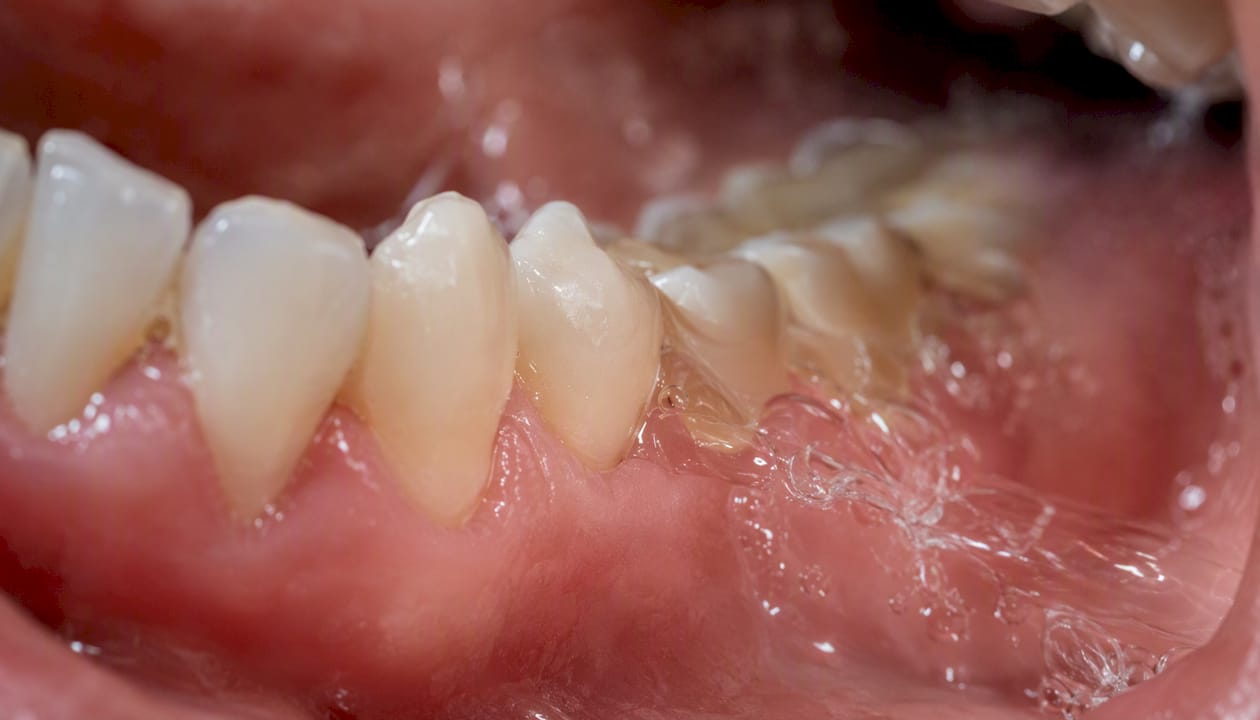
An antibacterial (or antimicrobial) mouth rinse is a liquid oral product containing an active ingredient — such as chlorhexidine gluconate, essential oils, CPC, or hydrogen peroxide — that reduces the number of bacteria in the mouth. It is used as an adjunct to brushing and flossing, not as a replacement for them.
Is an antibacterial rinse necessary after every cleaning?
Not always. For a routine prophylaxis cleaning in a healthy patient, a prescription rinse is generally not required. It becomes more relevant after deeper procedures like SRP, after oral surgery, or for patients with active gum disease, persistent inflammation, or higher infection risk.