A dental emergency is any urgent oral health situation that requires immediate professional attention to prevent severe pain, permanent damage, or serious harm to your health. According to the Royal College of Dental Surgeons of Ontario (RCDSO), a dental emergency occurs when a person is experiencing severe suffering or is at risk of sustaining serious bodily harm or permanent damage if treatment is not administered promptly. That definition matters because it draws a clear line between a situation that can wait for a regular appointment and one that genuinely cannot.
Not every toothache is an emergency, but some absolutely are. Knowing the difference can protect your health and, in some cases, your life.
What is a dental emergency, and how do you recognise one?
The RCDSO defines a dental emergency as a situation involving severe suffering, risk of permanent damage, serious bodily harm, or airway compromise unless treated promptly. In practical terms, that means pain severe enough to interfere with sleep or daily function, uncontrolled bleeding, or a significant infection. A dental emergency is distinct from a medical emergency, though the two can overlap when symptoms involve the airway, the heart, or systemic illness.
The Ontario Dental Association identifies four core signs that signal an urgent dental situation:
- Uncontrolled oral bleeding that does not stop with gentle pressure
- Severe infection or swelling that threatens the airway or spreads to the face or neck
- Acute oral-facial trauma from an accident, fall, or impact
- Pain that over-the-counter medications cannot relieve, such as ibuprofen or acetaminophen at standard doses
A dull ache that has lingered for weeks is not the same as a throbbing pain that woke you at 3 AM. Unmanaged toothaches can mask serious infections that spread to the bloodstream, causing life-threatening complications. Early intervention is what prevents a manageable problem from becoming a dangerous one.
Pro Tip: If you are unsure whether your situation qualifies as a dental emergency, call your dentist and describe your symptoms. Dental offices in Ontario conduct phone triage to assess urgency, so you do not need to guess on your own.
It also helps to know what a dental emergency is NOT. A chipped tooth with no pain, a lost filling that causes mild sensitivity, or a slightly loose crown are urgent dental concerns worth addressing soon, but they typically do not require a same-day emergency visit. The key question is always: is there severe pain, uncontrolled bleeding, swelling that is spreading, or risk of permanent damage?
Common types of dental emergencies and their symptoms
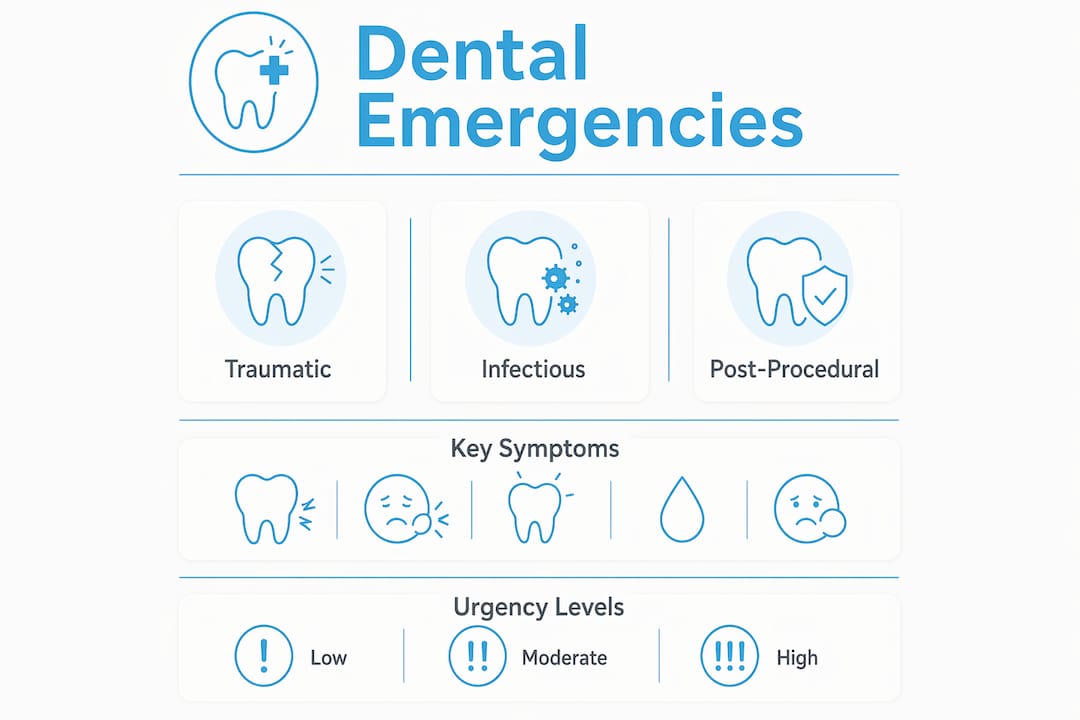
Dental emergencies fall into three broad categories: traumatic, infectious, and post-procedural. Understanding which type you are dealing with helps you respond appropriately and communicate clearly with your dental team.
Severe toothache
A toothache becomes an emergency when the pain is intense, constant, and unresponsive to over-the-counter pain relief. This level of pain often signals a deep cavity that has reached the nerve, a cracked tooth, or an abscess. Harvard Health notes that bacteria from a dental abscess can enter the bloodstream and travel to the brain or heart, making it potentially life-threatening if left untreated.

Knocked-out tooth (avulsion)
A tooth that has been completely knocked out is one of the most time-sensitive dental emergencies. The Canadian Dental Association states that a permanent tooth has the best chance of successful reimplantation when it is replanted within 10 minutes. After two hours, the chance of success drops considerably. Symptoms are obvious: the tooth is missing from the socket, and there is usually bleeding and pain at the site.

Chipped or fractured tooth
A minor chip without pain is not an emergency. A fracture that exposes the inner layer of the tooth (the dentin or pulp) is. Sharp edges can cut soft tissue, and an exposed nerve causes intense sensitivity to temperature and pressure. If the break is severe enough to affect the root, the tooth may not be salvageable without prompt care.
Dental abscess
An abscess is a pocket of infection, usually at the root of a tooth or in the gum tissue. It often appears as a painful, swollen bump on the gum. Symptoms include throbbing pain, fever, swollen lymph nodes in the neck, and a foul taste in the mouth. Left untreated, the infection can spread rapidly to the jaw, neck, and beyond.
Uncontrolled bleeding
Bleeding after a tooth extraction that does not slow after firm pressure for several minutes is an emergency. So is spontaneous gum bleeding that has no obvious cause. Persistent oral bleeding can indicate a clotting issue or a more serious underlying condition.
Soft tissue injuries
Lacerations to the lips, tongue, cheeks, or gums from a fall or impact require prompt attention. These wounds can bleed heavily and may need suturing. Children in Orangeville and Dufferin County who play contact sports are particularly vulnerable to this type of injury.
Lost or broken crown or filling
When a crown or filling falls out, the exposed tooth structure becomes vulnerable to temperature, pressure, and bacteria. This situation is urgent rather than a true emergency in most cases, but it can become one quickly if the exposed area becomes infected or the tooth fractures further.
Here is a quick reference for the most common urgent dental situations:
| Dental situation | Key symptoms | Urgency level |
|---|---|---|
| Severe toothache | Constant, intense pain; unresponsive to medication | High: same day |
| Knocked-out tooth | Missing tooth, bleeding socket | Critical: within 10 minutes |
| Dental abscess | Swelling, fever, throbbing pain, foul taste | High: same day |
| Fractured tooth (nerve exposed) | Sharp pain, temperature sensitivity | High: same day |
| Uncontrolled bleeding | Bleeding not slowing after several minutes | High: same day |
| Soft tissue laceration | Deep cut to lips, tongue, or cheeks | High: same day |
| Lost crown or filling | Sensitivity, exposed tooth structure | Moderate: within a day or two |
What to do in a dental emergency: immediate steps
Staying calm and acting quickly makes a real difference in outcomes. The steps below apply to the most common urgent situations you might face.
Contact your dentist first. Ontario dentists are obligated to provide or arrange emergency care for their patients, including after hours. Most practices have an after-hours message with instructions or an on-call number. Call before going anywhere else.
When you call, be ready to describe:
- The nature and location of the pain or injury
- When it started and how severe it is on a scale of 1–10
- Any swelling, bleeding, fever, or difficulty swallowing or breathing
- Any medications you are currently taking
For a knocked-out permanent tooth, time is everything. Handle the tooth by the crown (the white part you see when you smile), not the root. Do not scrub it or use soap. If you can, gently rinse it with milk or saline and attempt to place it back in the socket. If that is not possible, store it in milk or between your cheek and gum, and get to a dentist immediately. The 10-minute window for reimplantation is real, and every minute counts. For guidance specific to children, the team at Healthysmiledentalhygiene has detailed knocked-out tooth instructions for parents.
For bleeding, apply firm, steady pressure with a clean gauze pad or cloth for 15–20 minutes without lifting it to check. Biting down on a moist tea bag can also help, as the tannic acid in tea may assist with clotting.
For pain and swelling, apply a cold pack to the outside of the cheek in 15-minute intervals. The Canadian Dental Association advises against placing heat on a swollen area, as warmth can worsen infection-related inflammation. Cold is the right choice.
For a lost filling or crown, softened sugarless chewing gum can be pressed gently into the cavity as a temporary measure to protect the exposed tooth until you see your dentist. Never use sharp tools to probe the area or try to dislodge anything stuck nearby, as this risks damaging soft tissue.
Pro Tip: Never place aspirin or any pain medication directly on your gum or against the tooth. The Canadian Dental Association warns that this can cause a chemical burn to the gum tissue, making your situation worse. Take pain medication orally as directed on the label instead.
What to avoid in any dental emergency:
- Applying heat to swollen areas
- Placing aspirin directly on gum tissue
- Using sharp objects to probe the affected area
- Ignoring symptoms and waiting to see if they resolve on their own
- Eating or drinking anything very hot or cold until you have been assessed
Where to get emergency dental care in Ontario and Orangeville
Knowing where to go before an emergency happens is one of the most practical things you can do for your family’s oral health. In Ontario, the pathway is clear.
Start with your own dentist. The RCDSO mandates that dentists triage emergencies by phone first, assessing the situation and directing patients to the appropriate level of care. Even if your dentist’s office is closed, their after-hours message should provide an on-call number or refer you to a colleague who can help.
When to go to a hospital emergency room. A dental emergency and a medical emergency are not the same thing, but they can overlap. Go directly to the nearest hospital emergency department if you experience:
- Difficulty breathing or swallowing due to swelling
- Severe facial trauma involving broken bones
- Uncontrolled bleeding that is not responding to pressure
- High fever combined with facial swelling and difficulty opening your mouth
- Sudden jaw or neck pain that radiates to your chest (this can signal a cardiac event)
The hospital cannot treat the underlying dental problem, but it can stabilise life-threatening symptoms and prescribe antibiotics or pain management until you can see a dentist.
Emergency dental care in Orangeville and Dufferin County. Residents of Orangeville have access to local dental care that prioritises urgent needs. Healthysmiledentalhygiene serves patients of all ages and understands that dental emergencies do not follow a schedule. For a full overview of emergency dental care in Orangeville, including provincial guidelines and local options, the Healthysmiledentalhygiene team has put together a practical local resource.
Cost and insurance considerations. Emergency dental care in Canada is not covered under provincial health insurance plans like OHIP. Costs vary depending on the procedure required. Many private dental insurance plans do cover emergency visits, though coverage limits and waiting periods vary by plan. If you are uninsured or underinsured, ask your dental office about payment options before your visit. Healthysmiledentalhygiene has resources on maximising your dental insurance benefits that can help you understand what your plan covers before an emergency arises.
| Care pathway | When to use it | What to expect |
|---|---|---|
| Your regular dentist (after-hours line) | First contact for any dental emergency | Phone triage, appointment, or referral |
| On-call dentist group | When your dentist is unavailable | Same-day assessment and treatment |
| Walk-in dental clinic | Moderate urgency, no regular dentist | Assessment and temporary relief |
| Hospital emergency room | Airway compromise, severe trauma, high fever with swelling | Stabilisation, antibiotics, pain management |
| Healthysmiledentalhygiene, Orangeville | Local families and patients of all ages | Urgent care, triage, and follow-up |
Pro Tip: Save your dentist’s after-hours number in your phone now, before you ever need it. Also note the address of your nearest hospital emergency department. Having both ready means you spend less time searching and more time getting help when it matters.
How to prevent dental emergencies: advice from Healthysmiledentalhygiene
Most dental emergencies are not entirely random. Many have identifiable causes that preventive care can reduce, and the team at Healthysmiledentalhygiene sees this firsthand with patients across Orangeville and Dufferin County.
Wear a mouthguard during sports. The Canadian Dental Association recommends mouthguards for any contact or collision sport, including hockey, football, basketball, and even recreational cycling. A properly fitted mouthguard absorbs impact and dramatically reduces the risk of knocked-out or fractured teeth. Custom-fitted guards from your dental office offer better protection than over-the-counter options.
Stop using your teeth as tools. Opening packages, tearing tape, cracking nuts, or biting fingernails all put stress on tooth enamel that it was never designed to handle. Teeth are built for chewing food, not for gripping, tearing, or prying. This habit is one of the most common causes of chipped and fractured teeth that end up as emergency visits.
Attend regular dental check-ups. Many emergencies begin as small problems that were never caught early. A tiny cavity, a hairline crack, or early-stage gum disease rarely causes pain until it has progressed significantly. Regular dental visits allow your dental team to spot these issues before they become urgent, saving you pain, time, and cost.
Address dental anxiety early. Patients who avoid the dentist due to anxiety are more likely to present with advanced problems that require emergency care. Healthysmiledentalhygiene creates a calm, welcoming environment specifically to help nervous patients feel comfortable. Addressing anxiety early means you are more likely to attend regular appointments and less likely to face a preventable crisis.
Additional prevention habits that reduce emergency risk:
- Brush twice daily with a fluoride toothpaste and floss once daily
- Avoid chewing ice, hard candies, or popcorn kernels
- Wear a night guard if you grind your teeth during sleep (bruxism)
- Replace old fillings and crowns before they crack or fail
- Ask your dental hygienist about preventive dental services available locally
Pro Tip: If you have young children in Orangeville, talk to your dental hygienist about sealants and fluoride treatments. These preventive measures protect developing teeth from cavities and reduce the likelihood of painful dental problems down the road.
Prevention is not just about avoiding pain. It is about maintaining the confidence that comes with a healthy smile, and knowing that your teeth are strong enough to handle daily life without worry.

Healthysmiledentalhygiene is here for Orangeville families when emergencies happen and when you want to make sure they never do. Whether you need urgent care guidance or simply want to book a preventive visit, our team is ready to help. Reach out to us to book a visit and take the first step toward lasting oral health.
Key takeaways
A dental emergency requires immediate professional care to prevent severe pain, permanent damage, or serious health complications, and Ontario dentists are legally obligated to provide or arrange that care.
| Point | Details |
|---|---|
| Definition of dental emergency | Severe suffering, uncontrolled bleeding, significant infection, or risk of permanent damage all qualify. |
| Knocked-out tooth urgency | Reimplantation success is highest within 10 minutes; store the tooth in milk if immediate replantation is not possible. |
| First contact in Ontario | Call your own dentist first; Ontario dentists must triage emergencies by phone and arrange care. |
| Hospital vs. dental clinic | Go to the ER only for airway compromise, severe trauma, or systemic symptoms like high fever with spreading swelling. |
| Prevention reduces risk | Mouthguards, regular check-ups, and avoiding using teeth as tools prevent the majority of common dental emergencies. |
FAQ
What is classed as a dental emergency?
A dental emergency is any situation involving severe pain, uncontrolled bleeding, significant infection, or risk of permanent damage to teeth or surrounding tissues. The RCDSO defines it as a condition where a person is experiencing severe suffering or faces serious bodily harm without prompt treatment.
What are examples of dental emergencies?
Common examples include a knocked-out permanent tooth, a dental abscess with swelling and fever, severe toothache unrelieved by over-the-counter medication, uncontrolled oral bleeding, and acute facial trauma. A lost filling or crown is urgent but generally not a true emergency unless accompanied by severe pain or infection.
What counts as a tooth emergency?
A tooth emergency is any situation where a tooth has been knocked out, fractured to expose the nerve, or is causing severe and constant pain that cannot be managed at home. Visible swelling around a tooth or in the jaw alongside pain also signals an emergency requiring same-day dental attention.
Is a bad toothache considered a dental emergency?
Yes, a toothache that is severe, constant, and unresponsive to over-the-counter pain relief is a dental emergency. This level of pain often indicates an abscess or deep infection that can spread to the bloodstream if left untreated, making prompt care genuinely urgent.
Recommended
- 5 Signs You Should See an Emergency Dentist – Infinity Cosmetic Med Spa
- Emergency Dental Care in Orangeville: Where to Go When You Need Help Fast – Healthy Smile Dental Hygiene | Dentist Orangeville | Invisilign
- Same-Day Dentist Appointments in Orangeville: What Are Your Options? – Healthy Smile Dental Hygiene | Dentist Orangeville | Invisilign