A smile makeover is a personalised combination of cosmetic dental procedures designed to improve the overall appearance and function of your smile. Unlike a single treatment, it is a coordinated plan tailored to your unique facial proportions, bite mechanics, and oral health goals. No two plans are identical, because two patients seeking similar results can require completely different treatments. If you have been wondering what a smile makeover involves, this guide walks you through every stage, from the procedures included to realistic costs and timelines, so you can make a confident, informed decision.
What is a smile makeover and what does it include?
A smile makeover is not a menu of optional add-ons. It is a bespoke treatment plan built around your specific dental concerns, aesthetic goals, and overall oral health. The term “cosmetic dental treatment plan” is the standard clinical phrase dental professionals use, and you will hear both terms used interchangeably. The goal is always the same: to address multiple concerns in a phased, coordinated way rather than treating each issue in isolation.
What makes this approach effective is the sequencing. Oral health always comes first. Decay and gum disease must be resolved before any cosmetic work begins, because skipping this step leads to premature failures in restorations. Once your mouth is healthy, the cosmetic phase can proceed safely and with lasting results.

Which treatments are commonly part of a smile makeover?
The procedures included in a cosmetic dental treatment plan vary widely depending on your needs. Here are the most common options your dentist may recommend:
- Porcelain veneers: Thin shells bonded to the front surface of teeth to correct chips, stains, gaps, or uneven shapes. Veneers are one of the most requested treatments because they produce natural-looking results with minimal tooth reduction.
- Teeth whitening: Professional whitening is often the starting point. It establishes the shade target for all other restorations, so everything matches.
- Dental bonding: A tooth-coloured composite resin applied directly to the tooth surface. Bonding is cost-effective for minor chips or gaps and can often be completed in a single visit.
- Dental crowns: Used when a tooth is structurally compromised. Crowns restore both function and appearance, and modern ceramic options are virtually indistinguishable from natural teeth.
- Clear aligners or orthodontics: Correcting misalignment before placing veneers or crowns produces a more stable, lasting result. Clear aligner therapy is a common preparatory step in adult smile makeovers.
- Dental implants: The gold standard for replacing missing teeth. Implants preserve jawbone density and support surrounding teeth, making them a foundational element in many comprehensive plans.
- Gum contouring: Reshaping the gum line to correct a “gummy smile” or uneven tissue. This soft tissue treatment has a direct impact on how teeth appear in proportion to the face.
Pro Tip: Ask your dentist to show you digital smile design previews before committing to any treatment. Many clinics now use digital smile design technology to let you visualise your results before a single tooth is touched.
The most successful results are those that look natural and harmonise with your facial features. “Whiter and bigger” is not always better. Harmony between tooth shape, size, colour, and your overall face is the real goal.
What is the smile makeover process from consultation to final result?
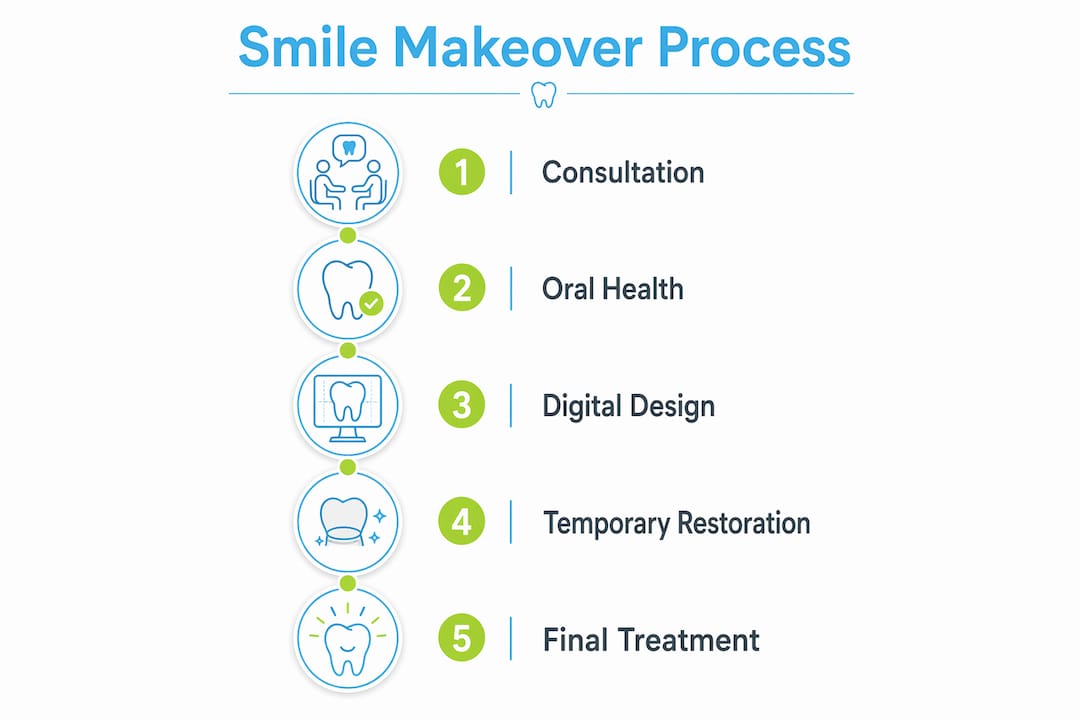
Understanding the process helps you plan your time and set realistic expectations. Smile makeovers follow a six-phase sequence that moves from assessment through to final placement.
- Initial consultation: Your dentist reviews your dental history, takes X-rays, and discusses your goals. Photographs and digital imaging are used to map your current smile and plan the outcome.
- Treatment planning: A detailed plan is created, specifying which procedures are needed, in what order, and over what timeframe. You receive a full cost breakdown at this stage.
- Oral health stabilisation: Any decay, gum disease, or infection is treated before cosmetic work begins. This phase protects your investment.
- Preparatory treatments: This may include orthodontics, gum contouring, or extractions. Gum recontouring alone requires 2–3 months of healing before final restorations can be placed, so this phase directly affects your overall timeline.
- Temporary restorations: Temporaries are placed so you can experience the proposed shape, length, and bite feel. Patients typically wear temporaries for 1–3 weeks and provide feedback before the permanent restorations are made. This is one of the most valuable steps in the entire process.
- Final restorations: Permanent veneers, crowns, or other restorations are placed and adjusted for fit, colour, and bite.
Pro Tip: Use your temporary restoration phase as a real-world trial. Eat, speak, and smile normally. Note anything that feels off and tell your dentist. Changes at this stage cost far less than adjustments after final placement.
| Phase | Typical duration |
|---|---|
| Consultation and planning | 1–2 visits over 1–2 weeks |
| Oral health stabilisation | 2–8 weeks depending on severity |
| Preparatory treatments (e.g. gum contouring) | 2–3 months healing time |
| Temporary restorations | 1–3 weeks |
| Final restoration placement | 1–2 visits |
| Total: straightforward cases | 4–8 weeks |
| Total: complex cases with orthodontics | Up to 12–24 months |
Straightforward cases involving whitening and bonding can sometimes be completed in a single session. Complex plans involving orthodontics or implants require patience, but the phased approach protects both your health and your results.
How much does a smile makeover cost?
Cost is one of the first questions patients ask, and the honest answer is that it depends on the scope of your plan. Comprehensive smile makeovers can range from $18,000 to $25,000 for full-arch cases involving 16 or more restorations mixing bridges, veneers, and composites. That figure reflects the complexity of materials like E.max ceramic versus composite resin, and the number of teeth involved.
Several factors influence the final price:
- Number of restorations: More teeth treated means higher cost. A six-tooth veneer case costs significantly less than a full-arch plan.
- Materials chosen: Porcelain and E.max ceramic cost more than composite resin but offer greater durability and a more natural appearance.
- Preparatory treatments: Orthodontics, implants, or gum surgery add to the total and extend the timeline.
- Geographic location and clinic: Fees vary between regions and between general and specialist practices.
- Quick treatments vs. comprehensive plans: A whitening and bonding plan may cost a fraction of a full veneer case.
Insurance rarely covers purely cosmetic procedures, but some elements, such as crowns placed for structural reasons, may qualify for partial coverage. Understanding your dental insurance benefits before you begin can help you plan your budget more accurately. Always request a written, itemised quote from your dental team before committing to any plan.
Who is a good candidate for a smile makeover?
A smile makeover suits patients who have multiple dental concerns they want to address together. If you are dealing with a combination of discolouration, chips, gaps, missing teeth, or misalignment, a coordinated plan produces better results than treating each issue separately over time.
The right candidate also has realistic expectations. Subtle, natural-looking results that complement your features are the standard of excellence in cosmetic dentistry. Patients who expect a dramatic, celebrity-style transformation may be disappointed if that outcome does not suit their facial anatomy.
“Ethical dentists prioritise less invasive treatments when they meet patient goals effectively. Simpler procedures like whitening or minor bonding can accomplish 90% of desired results for some patients, and a good dentist will tell you that honestly.”
You may not need a full smile makeover if your concern is limited to a single issue. Consider these scenarios:
- Single stained tooth: Professional whitening or a single veneer may be sufficient.
- One chipped tooth: Dental bonding can restore it in one visit without a comprehensive plan.
- Mild discolouration across all teeth: Professional whitening alone may achieve the result you want.
- Multiple concerns across several teeth: This is where a coordinated cosmetic dental treatment plan delivers the most value.
The best way to find out is through a smile assessment with a qualified dental professional. A thorough assessment reviews your oral health, bite, gum condition, and aesthetic goals before any recommendation is made. Good communication between you and your dentist is the foundation of a successful outcome.
Smile makeover support at Healthysmiledentalhygiene in Orangeville
Healthysmiledentalhygiene offers personalised cosmetic dental planning for patients across Orangeville and Dufferin County. The team takes a patient-centred approach, starting with a thorough assessment of your oral health before discussing any cosmetic options.

Whether you are curious about professional teeth whitening as a first step or ready to explore a full cosmetic treatment plan, the Healthysmiledentalhygiene team can walk you through your options clearly and without pressure. The practice also helps patients understand how to maximise dental insurance benefits for applicable treatments. Book a visit with the Orangeville team to get a personalised assessment and find out what is possible for your smile.
FAQ
What does a smile makeover include?
A smile makeover includes a personalised combination of cosmetic dental procedures such as veneers, whitening, bonding, crowns, clear aligners, implants, and gum contouring. The specific treatments depend on your dental concerns and aesthetic goals.
How long does a smile makeover take?
Straightforward cases take 4–8 weeks, while complex plans involving orthodontics or implants can take 12–24 months. The timeline depends on the number of treatments required and any healing time needed between phases.
Is a smile makeover covered by dental insurance?
Purely cosmetic procedures are generally not covered by insurance. However, treatments with a functional component, such as crowns for structurally damaged teeth, may qualify for partial coverage. Reviewing your plan with your dental team before starting is the best approach.
How do I know if I need a full smile makeover or just one treatment?
If you have a single concern, one targeted treatment like whitening or bonding is often sufficient. A full cosmetic dental treatment plan is most beneficial when you have multiple concerns across several teeth that you want to address together.
What is a smile assessment?
A smile assessment is an initial consultation where your dentist evaluates your oral health, bite, gum condition, and aesthetic goals. It is the first step in determining whether a smile makeover or a simpler treatment is the right fit for you.
Key takeaways
A smile makeover is a personalised, phased cosmetic dental treatment plan that addresses multiple concerns together, always starting with oral health before aesthetics.
| Point | Details |
|---|---|
| Personalised treatment plan | No two smile makeovers are identical; plans are tailored to your anatomy, bite, and goals. |
| Oral health comes first | Decay and gum disease must be resolved before any cosmetic procedures begin. |
| Timeline varies widely | Simple cases take 4–8 weeks; complex plans with orthodontics can take up to 24 months. |
| Cost reflects scope | Full-arch makeovers can range from $18,000 to $25,000 depending on materials and number of restorations. |
| Simpler options may suffice | Whitening or bonding alone can meet the goals of many patients without a full treatment plan. |