
Visiting the dentist twice yearly is the standard preventive care recommendation endorsed by the Canadian Dental Association and dental professionals across Ontario. These routine appointments are not just about clean teeth. They are your best defence against cavities, gum disease, and oral health problems that develop silently before causing pain. Preventive care with twice-yearly visits can reduce your risk of tooth decay by up to 40%, which means fewer fillings, less discomfort, and real long-term savings for your family.
Why dentist visits twice yearly are the recommended standard
The twice-yearly dental visit, known professionally as a “recall appointment,” is the baseline schedule recommended for most adults and children in Canada. The Canadian Dental Association supports this interval as the most practical way to catch problems early and keep teeth and gums in good shape. Catching a small cavity at a routine visit costs far less, in time and money, than treating an abscess or needing a root canal later.
The reason this schedule works so well is timing. Gum disease and cavities are usually asymptomatic until they reach an advanced stage. You can feel perfectly fine and still have early-stage decay or inflammation developing between your teeth or below the gumline. Waiting until something hurts almost always means the problem has already progressed.
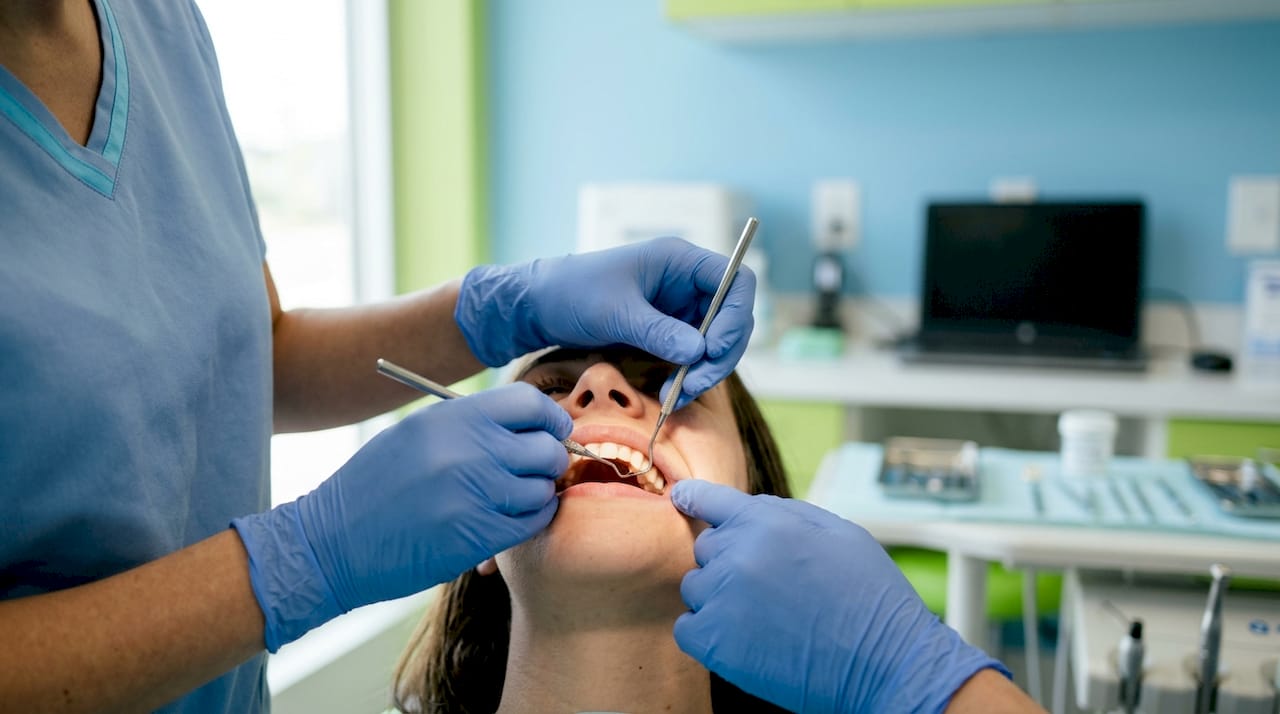
Six months is also the interval at which most patients accumulate enough plaque and tartar buildup to warrant professional removal. Brushing and flossing at home are essential, but they cannot substitute for what a dental hygienist does during a professional cleaning. The twice-yearly schedule keeps that buildup in check before it causes lasting damage.
What happens during a routine dental appointment?
A standard recall appointment typically lasts 30–60 minutes for existing patients, though new patients usually need more time for a comprehensive initial assessment. Knowing what to expect makes the visit much less stressful, especially for children or patients who feel anxious about dental care.
Here is what most routine appointments include:
- Professional cleaning: Your dental hygienist removes plaque and tartar from all tooth surfaces, including areas your toothbrush cannot reach. They also polish your teeth to remove surface stains.
- Dental examination: The dentist checks each tooth for signs of decay, cracks, or wear. They also assess your bite and jaw function.
- Gum assessment: The hygienist measures the depth of the pockets around your teeth to check for signs of gum disease.
- Oral cancer screening: The dentist visually examines your tongue, cheeks, throat, and soft tissues for any unusual changes.
- X-rays: Taken periodically (not necessarily every visit) to detect decay or bone loss that is not visible to the naked eye.
- Restoration check: Any existing fillings, crowns, or bridges are inspected to confirm they are still intact and functioning well.
The role of your dental hygienist goes well beyond cleaning. They educate you on brushing technique, flossing habits, and any areas of concern they notice between visits. That guidance is genuinely useful and personalised to your mouth, not generic advice.
Pro Tip: Bring a list of any medications you are currently taking to each appointment. Some medications cause dry mouth or affect gum tissue, and your hygienist needs that information to give you the best care.
Why six months? The biology behind the interval
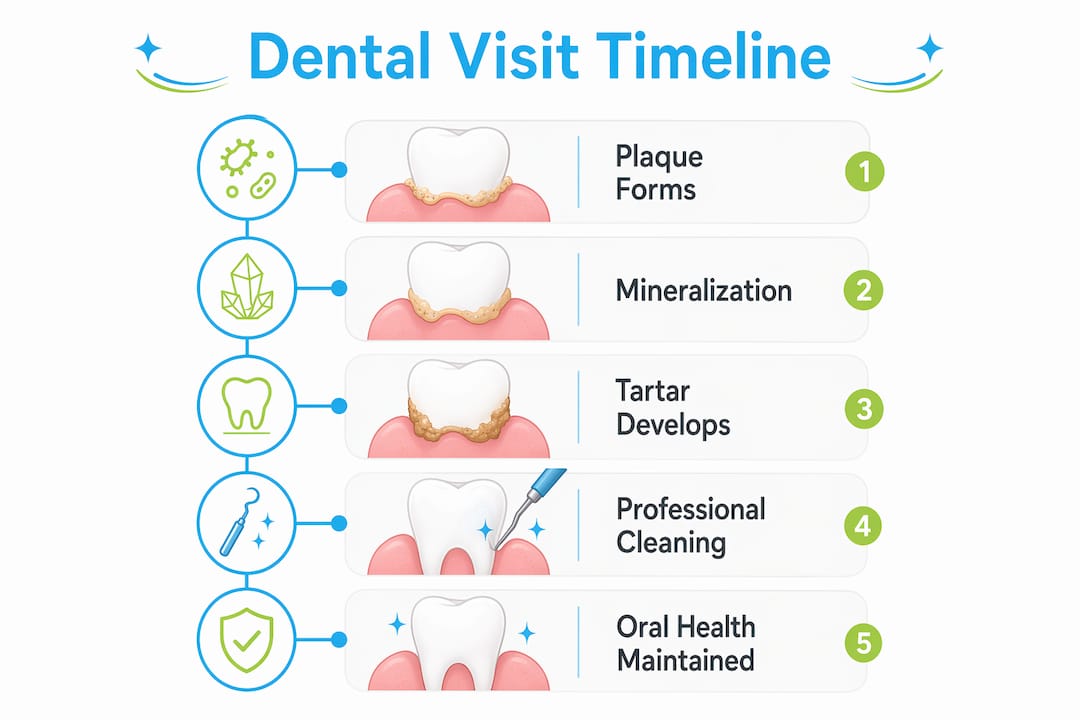
The six-month interval is not arbitrary. It is grounded in how quickly plaque forms and what happens when it is not removed.
Plaque begins forming within hours after you brush your teeth. Within 24–72 hours, that soft plaque starts to mineralise into tartar, a hard calcified deposit that no amount of brushing or flossing can remove. Only a professional cleaning with specialised instruments can clear tartar away. Once tartar builds up along and below the gumline, it creates the ideal environment for the bacteria that cause gum disease and cavities.
The table below shows how the timeline of plaque and tartar development connects to oral health risks.
| Stage | Timeframe | What happens | Risk |
|---|---|---|---|
| Plaque formation | Within hours | Bacteria coat tooth surfaces | Low, removable at home |
| Plaque thickening | 24–72 hours | Plaque hardens into tartar | Moderate, requires professional care |
| Tartar accumulation | Weeks to months | Tartar irritates gum tissue | High, gum inflammation begins |
| Gum disease onset | Months without treatment | Pockets deepen around teeth | Serious, bone loss possible |
At the six-month mark, most patients have accumulated enough tartar to make professional removal necessary. Waiting longer than six months routinely allows that buildup to advance to a stage where gum disease becomes harder to reverse. Early detection at each visit prevents complex treatments and reduces dental emergencies.
Pro Tip: If you notice bleeding when you brush or floss, do not wait for your next scheduled visit. Bleeding gums are an early sign of inflammation and worth a call to your dental office sooner.
Does everyone need to visit exactly twice a year?
The twice-yearly schedule is the right starting point for most people, but dental visit frequency should be personalised based on your individual risk profile. Modern dental practice in Ontario increasingly uses a risk-based recall system, which means your dentist assesses your specific situation and recommends the interval that suits you best.
Patients who benefit from more frequent visits (every 3–4 months) include:
- People with diabetes, since high blood sugar accelerates gum disease and slows healing
- Smokers, who face significantly higher risk for gum disease and oral cancer
- Patients with a history of periodontitis (advanced gum disease)
- People undergoing chemotherapy or radiation, which affects saliva production and tissue health
- Patients with dry mouth caused by medications or medical conditions
- Those with a history of frequent cavities or poor enamel
Smoking alone increases the risk for gum disease and oral cancer significantly, which is why smokers are typically advised to visit every 3–4 months rather than every six. That more frequent schedule allows the hygienist to monitor changes and intervene before problems advance.
On the other end of the spectrum, patients with excellent oral hygiene, low plaque levels, no history of gum disease, and stable restorations may be suitable for annual visits. However, this is a decision your dentist makes based on a full assessment, not one to make on your own. The oral health checkup frequency guide for families in Orangeville offers helpful guidance on how to think about personalising your schedule.
Age also plays a role. Children benefit from regular visits starting around age one, or when the first tooth appears. Seniors often need more frequent monitoring due to dry mouth from medications, receding gums, and the increased complexity of managing restorations over time.
How regular dental visits protect your whole family’s health
Oral health does not exist in isolation. Dental health links directly to systemic health, and reducing oral inflammation supports the management of conditions like diabetes and heart disease. Bacteria from untreated gum disease can enter the bloodstream and contribute to inflammation throughout the body. Keeping your mouth healthy is one of the most practical things you can do for your overall wellbeing.
“No symptoms does not mean no disease. Gum disease and cavities are usually asymptomatic until they reach an advanced stage. Regular dental visits catch what you cannot feel or see on your own, and that early detection is what keeps small problems from becoming serious ones.”
The benefits of twice-yearly appointments extend well beyond disease prevention:
- Fresher breath: Professional cleaning removes the bacteria-laden tartar that causes persistent bad breath.
- Whiter, brighter teeth: Polishing removes surface stains from coffee, tea, and food.
- Confidence: A clean, healthy smile affects how you feel in social and professional situations.
- Long-term cost savings: Catching a cavity early means a simple filling rather than a crown or extraction later.
- Peace of mind: Knowing your mouth is healthy reduces anxiety and lets you focus on the rest of your life.
For families in Orangeville and Dufferin County, building a consistent dental routine for every family member, from toddlers to grandparents, creates lifelong healthy habits. Children who visit the dentist regularly from a young age are far less likely to develop dental anxiety and far more likely to maintain good oral health into adulthood. The connection between oral and systemic health is well established, and twice-yearly visits are one of the simplest ways to support both.
Most Canadian dental insurance plans cover two preventive cleanings per year at 80–100% coverage, making the financial barrier to routine care lower than many families realise. For patients with diagnosed gum disease, plans often cover three to four cleanings annually. Understanding your coverage helps you use your benefits fully and avoid paying out of pocket for care that is already included in your plan.
Healthysmiledentalhygiene is here for your family in Orangeville
Healthysmiledentalhygiene offers friendly, family-focused preventive and restorative dental care for patients of all ages in Orangeville, Ontario. Whether you are booking your child’s first appointment, managing a chronic condition that affects your oral health, or simply looking to stay on top of your routine care, the team at Healthysmiledentalhygiene is ready to help you find the right schedule.

Healthysmiledentalhygiene also helps families make the most of their dental insurance benefits. Understanding what your plan covers, and when to book to maximise those benefits, can make a real difference for your family’s budget. Visit the dental insurance guide to learn how to get the most from your coverage, or book a visit with the Orangeville team to get personalised advice on your recall schedule and preventive dental care options.
Key takeaways
Twice-yearly dental visits are the most effective baseline schedule for preventing tooth decay, detecting gum disease early, and protecting your family’s long-term oral and overall health.
| Point | Details |
|---|---|
| Twice-yearly is the standard | The Canadian Dental Association endorses six-month recall appointments as the baseline for most patients. |
| Plaque becomes tartar fast | Plaque mineralises into tartar within 24–72 hours, making professional removal every six months necessary. |
| Risk factors change the schedule | Diabetes, smoking, and gum disease history may require visits every 3–4 months for adequate protection. |
| Oral health affects overall health | Reducing oral inflammation supports management of conditions like diabetes and heart disease. |
| Insurance often covers two visits | Most Canadian dental plans cover two preventive cleanings yearly at 80–100%, reducing out-of-pocket costs. |
FAQ
How often should most adults see a dentist?
Most adults benefit from twice-yearly dental visits as a baseline. Your dentist may recommend more or fewer visits depending on your personal risk factors and oral health history.
Can I go once a year if my teeth feel fine?
Feeling fine does not mean your mouth is disease-free. Gum disease and cavities are typically asymptomatic until advanced, so annual visits may miss early problems that a six-month schedule would catch.
Why do smokers need more frequent dental visits?
Smoking significantly increases the risk of gum disease and oral cancer, which is why dental professionals typically recommend visits every 3–4 months for smokers rather than the standard six-month interval.
Does dental insurance cover twice-yearly visits?
Most Canadian dental insurance plans cover two preventive cleanings per year at 80–100% coverage. Patients with diagnosed gum disease are often covered for three to four cleanings annually.
When should children start seeing a dentist?
Children should begin dental visits around age one, or when their first tooth appears. Starting early builds comfort with dental care and allows the hygienist to monitor development from the beginning.
Recommended
- Are Kids’ Dental Cleanings Necessary Every 6 Months? What Orangeville Parents Should Know – Healthy Smile Dental Hygiene | Dentist Orangeville | Invisilign
- Unlocking the Secrets to Healthy Smiles: How Often Should Your Family Really See the Dentist? – Healthy Smile Dental Hygiene | Dentist Brampton | Invisilign
- Smile Alert! 10 Telltale Signs It’s Time for a Family Dental Check-Up! – Healthy Smile Dental Hygiene | Dentist Brampton | Invisilign