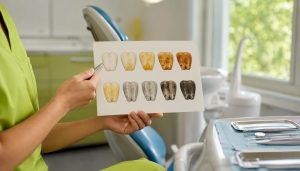
The single most effective way to maintain whitening results longer is to combine a careful 48-hour aftercare window, with consistent daily habits and planned professional maintenance. No whitening treatment, however professional, holds its results without the right follow-through.
Your 24–48 hour action checklist:
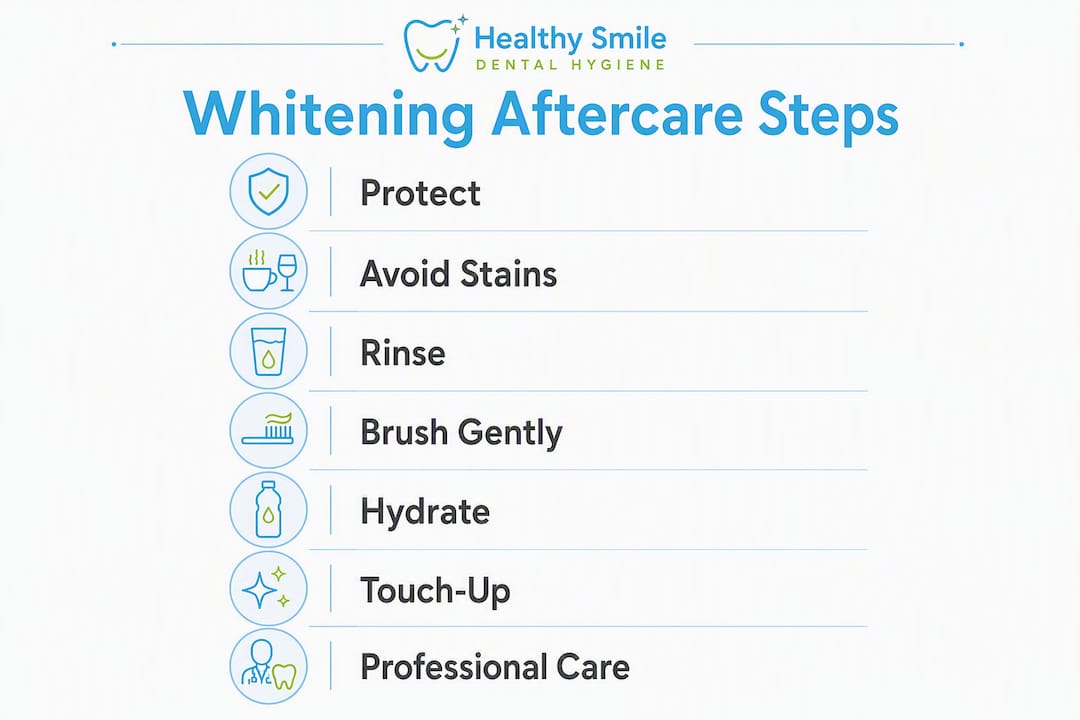
- Avoid coffee, tea, red wine, dark sauces, and berries for the first 48 hours
- Rinse with water immediately after any staining food or drink
- Brush gently with a soft-bristled toothbrush and sensitivity-friendly toothpaste
- Avoid tobacco entirely
- Choose room-temperature foods and drinks to reduce sensitivity
- Book a professional cleaning if one is overdue
The first 48 hours after whitening are the most critical window for protecting your results. Enamel is temporarily more porous after bleaching, making it unusually receptive to chromogens — the pigment molecules in dark foods and drinks. What you do in this short window, has a measurable impact on how long your brighter shade lasts.
Table of Contents
- 1. Why aftercare determines how long your whitening lasts
- 2. Foods and drinks that re-stain teeth — and how to reduce their impact
- 3. Your daily routine to protect whitened enamel
- 4. Lifestyle changes that make the biggest long-term difference
- 5. How professional maintenance keeps whiteness lasting longer
- 6. Managing sensitivity safely while keeping results on track
- 7. How crowns, veneers, and fillings affect your whitening results
- 8. How often should you whiten, and when is it time for a touch-up?
- Key takeaways
- Your whitening maintenance starts at Healthysmiledentalhygiene in Orangeville
- Trusted Canadian sources and further reading
- FAQ
1. Why aftercare determines how long your whitening lasts
Aftercare largely controls whether your results last from about six months up to two years. The Canadian Dental Association confirms that whitening effects are typically durable for around six months to two years, with that timeline depending heavily on lifestyle choices such as smoking, diet, and oral hygiene.
Here is why: bleaching agents temporarily open enamel pores to break down chromogens. Once treatment ends, those pores remain more receptive for a short period, meaning staining compounds from food and drink can penetrate more easily than usual. The enamel gradually rehardening over the following days is why the first 48 hours carry so much weight.
Factors that most influence how long results last:
- Diet (frequency of staining foods and beverages)
- Tobacco use
- Daily oral hygiene consistency
- Saliva flow and oral microbiome health (saliva naturally neutralises acids and washes away pigments)
- Whether professional cleanings are kept up
Pro Tip: How you consume staining drinks matters as much as whether you consume them. Sipping coffee slowly over an hour keeps your enamel in prolonged contact with chromogens. Finishing the cup in one sitting and rinsing immediately afterward reduces that exposure significantly.
2. Foods and drinks that re-stain teeth — and how to reduce their impact
Coffee, tea, red wine, dark sodas, berries, tomato and soy sauces, and strongly pigmented spices like turmeric and paprika are the main culprits. They re-stain through two mechanisms: tannins and chromogens bind to enamel surfaces, while acids temporarily soften enamel and make it more absorbent.

The good news is that total avoidance is rarely necessary. Reducing contact time is what actually moves the needle. Canadian Dental Advisor guidance recommends several practical habits that make a real difference without requiring you to give up your morning coffee permanently.
Practical habit adjustments:
- Follow a “white diet” for the first 48 hours (chicken, fish, rice, eggs, white cheese, bananas)
- Drink staining beverages in one sitting rather than sipping throughout the day
- Add a splash of milk to tea — it binds tannins before they reach your teeth
- Use a straw for iced coffee or cold drinks to reduce direct enamel contact
- Swish with water for 5–10 seconds immediately after consuming anything pigmented
- Avoid smoking or tobacco products entirely during the aftercare window and beyond
Pro Tip: When avoidance is impractical — at a dinner party, for example — finish the glass, then excuse yourself to rinse. That single habit, done consistently, does more for lasting whiteness than occasional strict avoidance followed by long unrinsed exposures.
3. Your daily routine to protect whitened enamel
A short, consistent daily routine is what separates patients who keep their results for up to two years from those who see fading within six months. The routine does not need to be complicated. Best practices for daily dental hygiene point to the same core steps, repeated reliably.
Step-by-step daily routine:
- Morning: Brush for two minutes with a soft-bristled or electric toothbrush. Use fluoride toothpaste on most days.
- After meals: Rinse with water. Wait approximately 30 minutes after acidic foods or drinks before brushing — brushing too soon can abrade softened enamel.
- Evening: Brush again, then floss. Plaque and staining compounds accumulate most heavily between teeth, where brushing cannot reach.
- Two to three times per week: Substitute a whitening toothpaste for your regular fluoride toothpaste. Whitening toothpastes work through mild abrasion and are best used intermittently rather than daily to avoid unnecessary enamel wear.
- As needed: If sensitivity is present, switch to a desensitising toothpaste containing potassium nitrate for a few days.
Product guidance at a glance:
- Soft-bristled or electric toothbrush (hard bristles accelerate enamel wear)
- Fluoride toothpaste for daily use
- Whitening toothpaste 2–3 times per week only
- Alcohol-free mouthwash if dry mouth is a concern (alcohol can reduce saliva flow)
4. Lifestyle changes that make the biggest long-term difference
Quitting or reducing tobacco use, moderating staining beverages, and staying well hydrated have a larger effect on whitening longevity than almost any product you can buy. Tobacco is the fastest re-stainer of all: nicotine and tar bond directly to enamel and penetrate deeply, producing stains that resist even professional cleaning over time.

Frequency matters more than quantity with beverages. A patient who sips red wine slowly over three hours creates far more staining exposure than one who has a full glass with dinner and rinses afterward. Alcohol also reduces saliva flow, which removes one of your mouth’s natural defences against pigment accumulation.
Lifestyle adjustments worth prioritising:
- Quit or significantly reduce tobacco use — no maintenance routine fully compensates for regular smoking
- Batch staining beverages to mealtimes rather than spreading them through the day
- Drink plenty of water; good hydration supports saliva flow, which naturally washes away pigments and maintains a neutral oral pH
- At social events, alternate staining drinks with water
- Avoid prolonged sipping of any dark beverage
Pro Tip: Rather than trying to maintain peak whiteness continuously, schedule touch-up treatments around major life events — a wedding, a reunion, a milestone birthday. This approach is far more sustainable than strict daily avoidance and keeps your smile at its best when it matters most.
5. How professional maintenance keeps whiteness lasting longer
Planned professional maintenance is the most reliable way to extend whitening results over the long term. Professional whitening results can last from about six months up to two years, and regular cleanings are a key part of reaching that upper range.
There are three main options for professional and semi-professional maintenance:
- In-office whitening: Higher concentration, faster results, and immediate visible change. Best for patients who want a significant refresh before an event or whose shade has regressed noticeably.
- Dentist-supplied take-home trays: Lower concentration gel used over a longer course. Custom trays fit precisely to your teeth, which means the gel stays where it belongs and does not irritate gums. They are reusable, making them a cost-effective option for periodic top-ups.
- Over-the-counter products: Available at pharmacies, but with lower concentrations and less precise fit. Health Canada advises using all home whitening products strictly according to directions and under dental supervision.
Most patients benefit from regular maintenance touch-ups every 6–12 months, at intervals guided by their staining habits and dental advice. Your dentist will advise based on your baseline shade and whether you have restorations.
The Canadian Dental Association recommends that whitening be undertaken under a dentist’s supervision and combined with professional cleanings. Supervision allows your dentist to monitor enamel health, catch early sensitivity, and adjust your maintenance plan before problems develop.
Pro Tip: Reuse your custom trays for efficient top-ups rather than purchasing new over-the-counter strips each time. A small amount of touch-up gel used in a well-fitting tray for a few nights is gentler and more effective than repeated strip applications.
6. Managing sensitivity safely while keeping results on track
Sensitivity after whitening is common and usually temporary. The right response is to adjust, not abandon. Health Canada advises decreasing wear time or pausing for two to three days before resuming if sensitivity occurs during home whitening.
Immediate steps for managing sensitivity:
- Switch to a desensitising toothpaste with potassium nitrate for several days
- Use a soft-bristled toothbrush and gentle pressure
- Avoid temperature extremes in food and drink during the sensitive period
- Pause whitening treatment for 2–3 days if discomfort is noticeable
- Ask your dentist about a professional fluoride varnish application for faster relief
Overuse of whitening products is not harmless. The CDA cautions that the long-term effects of repeated or excessive bleaching are not fully understood, and may include tooth pitting and pulp (“nerve”) damage. Following product directions and dental supervision protects you from these risks.
Signs that warrant a professional review rather than self-management: persistent pain beyond a few days, gum irritation that does not settle, or uneven shade changes. These are worth a call to your dental team.
7. How crowns, veneers, and fillings affect your whitening results
Crowns, veneers, and composite fillings do not respond to bleaching agents. The Canadian Dental Association is clear on this: restorations are unaffected by bleaching compounds and may appear darker relative to teeth that have been whitened. This is one of the most common sources of disappointment after whitening, and it is entirely avoidable with the right planning.
Practical guidance for patients with restorations:
- Consult your dentist before whitening if you have crowns, veneers, or multiple fillings — a pre-whitening assessment sets realistic expectations
- Complete whitening first, then plan new restorations to match the achieved shade
- If existing restorations create a visible mismatch after whitening, discuss replacement or stain-resistant materials with your dentist
- For full guidance on what is and is not possible, the Orangeville restoration and whitening guide covers sequencing in detail
Pro Tip: Small, periodic touch-up treatments on your natural teeth can keep them closer to the shade of existing restorations, reducing the need to replace those restorations prematurely. Discuss this strategy with your hygienist at your next visit.
8. How often should you whiten, and when is it time for a touch-up?
Most patients need a maintenance touch-up roughly every 6–12 months. Individual factors shift that window in both directions. A patient with careful habits, good hydration, and minimal staining beverages may sometimes stretch closer to two years, while someone who drinks several cups of coffee daily and skips rinsing will likely see noticeable shade regression within six months.
Signs it is time for a touch-up:
- Your smile looks noticeably less bright than it did after treatment
- You have had a period of heavier coffee, wine, or staining food consumption
- You are preparing for a significant event and want your smile at its best
- Your dental professional recommends it at a routine visit
- It has been 12 months since your last whitening treatment
Safe frequency matters. More aggressive whitening done too often can risk enamel damage and pulp irritation, as the CDA cautions. The goal is maintenance, not escalation. Combining a professional cleaning with your touch-up visit is efficient and gives your hygienist the chance to assess enamel health at the same time.
Key takeaways
Consistent aftercare, not the whitening treatment itself, determines how long your results last — the most effective approach combines a 48-hour protective window, a gentle daily routine, and scheduled professional maintenance every 6–12 months, keeping results durable for about six months up to two years.
| Point | Details |
|---|---|
| Protect the first 48 hours | Avoid dark foods and drinks; rinse with water after anything pigmented during this critical window. |
| Daily routine matters | Brush twice daily with a soft brush, floss nightly, and use whitening toothpaste 2–3 times per week only. |
| Professional maintenance | Most patients benefit from a cleaning and touch-up every 6–12 months to prolong whitening results. |
| Manage sensitivity safely | Pause treatment 2–3 days and use potassium nitrate toothpaste; consult your dentist if discomfort persists. |
| Healthysmiledentalhygiene | Offers professional whitening, custom take-home trays, and maintenance plans for Orangeville families. |
Your whitening maintenance starts at Healthysmiledentalhygiene in Orangeville
A brighter smile is worth protecting, and Healthysmiledentalhygiene makes that straightforward for families and adults across Orangeville and Dufferin County. The team offers professional whitening and custom take-home trays, routine cleanings, sensitivity management, and shade-matching consultations for patients with restorations — everything you need to keep results lasting as long as possible.

What sets a supervised maintenance plan apart from a drugstore top-up kit is personalisation. Your hygienist can assess your enamel health, adjust your touch-up schedule to your actual habits, and catch early sensitivity before it becomes a problem. That kind of care is especially valuable for patients with crowns, fillings, or veneers who need sequencing advice before whitening. For families looking to build lasting dental hygiene habits alongside cosmetic maintenance, the team at Healthysmiledentalhygiene can help you understand your options. Book a visit today and keep your smile at its best.
This article provides general information about teeth whitening aftercare and is not a substitute for professional dental advice. Please consult a qualified dental professional for guidance specific to your own situation.
Trusted Canadian sources and further reading
The recommendations in this guide draw on the following authoritative Canadian and clinical sources:
- Health Canada — safe use of home tooth whitening kits
- Health Canada — evidence of safety requirements for tooth whitening products
- Canadian Dental Association — tooth bleaching and whitening position statement
- Canadian Dental Association — teeth whitening overview
- Canada Dental Advisor — how to keep your teeth white after whitening
- Healthysmiledentalhygiene — professional whitening services in Orangeville
For personalised advice specific to your teeth, restorations, and lifestyle, the Healthysmiledentalhygiene team in Orangeville is always a good place to start.
FAQ
Can you make teeth whitening last longer?
Yes. Combining a 48-hour protective diet after treatment, consistent daily brushing and flossing, rinsing after staining foods, and scheduling professional touch-ups every 6–12 months can typically extend results from about six months up to two years, according to the Canadian Dental Association.
How often do you need to whiten to maintain your results?
Most patients benefit from a touch-up every 6–12 months. Those with heavier staining habits may need maintenance closer to six months, while patients with careful daily habits may stretch treatment intervals toward two years.
Does leaving whitening strips on longer make them work better?
No. Peroxide activity diminishes quickly once applied, so extending wear time beyond the product’s directions does not reliably increase whitening and raises the risk of sensitivity and gum irritation. Follow the directions exactly.
How do you manage sensitivity while maintaining whitening results?
Use a desensitising toothpaste with potassium nitrate, switch to a soft-bristled toothbrush, and pause treatment for 2–3 days if discomfort occurs. Health Canada recommends decreasing wear time as a first step. If sensitivity persists beyond a few days, consult your dental professional.
Do crowns and fillings whiten along with natural teeth?
No. Crowns, veneers, and composite fillings are unaffected by bleaching agents and may look darker after your natural teeth are whitened. A pre-whitening dental assessment at Healthysmiledentalhygiene helps you plan sequencing and set realistic expectations before treatment.